Grade level and subjects
• Recommended for grades 6-12
• Subjects: Government and Health / Phys. Ed
• Works in Classroom, Hybrid, and Homeschool settings
What students will learn
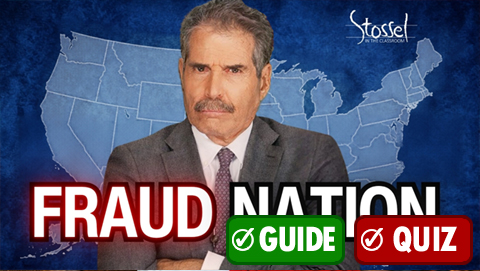
By the end of this lesson, students will be able to:
• explain how food insecurity differs from hunger;
• identify ways that media has exaggerated this belief of “food insecurity.”; and
• discuss how welfare programs perpetuate dependency on government programs.
Key concepts and terms covered
Dependent, Insecurity, Poverty, and Welfare.
Sample discussion questions
• What is the difference between food insecurity and hunger?
• How does the video suggest that government programs may contribute to continued dependency of people on the government? How might the government benefit from people’s dependency on it and its programs?
• What is self-sufficiency? Would you define self-sufficiency as part of the American Dream or a characteristic in which America’s history has been built upon? Why or why not?
• Michelle Obama gave an example of food desert as a mom who wanted to buy some fresh fruit for her kid’s lunch having to get on a bus. Does that make sense to you? What about people who live in the suburbs—don’t most of them need to drive to a food store? Why isn’t that considered a food desert?
• Why is there a myth that junk food is more expensive than healthy variety foods? How does this myth play into the narrative of “food insecurity?”
What’s in the free teacher’s guide
This printable 10-page Teacher's Guide includes a lesson description, learning objectives, key vocabulary, a fill-in viewing guide with answer key, discussion and analysis questions, and classroom activities.
Standards alignment
Aligned to state standards — use the SITC Standards Tool to match this video to the standards in your state.
 MiniGuide (includes Discussion Questions)

 Teacher’s Guide
 Google Quiz
 Printable Quiz
 Kahoot
 Video Download