
Home > Blog
Blog
Banned Books Week runs October 4 through 10 this year. The theme is “Let Books Be. Protect the Freedom to Read.” This is a topic where a teacher can do everything right and still end up in somebody’s email to the administration.
September 17 falls on a Thursday this year. If you're anything like the teachers I talk to, the plan right now is roughly: read the Preamble, hand out a worksheet, hope it lands.
In the last tutorial, I built a current events researcher you can talk into existence in plain English — no code, no computer science degree. This one uses the same trick for the nightmare every teacher knows: the plans you have to leave behind when you can’t be there.
Watch the video below to see me build this current events tool from scratch — the same approach works for any subject you teach — then grab the how-to guide and the class reference template (both linked under this post) and build your own.
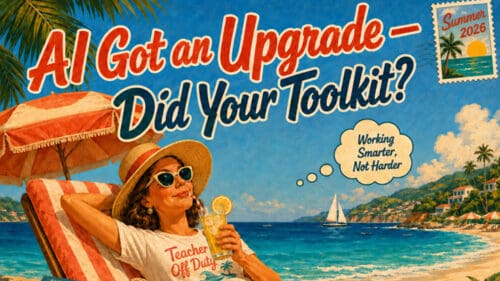
Today, AI is something you build with. You set it up once — feed it your subject, your grade level, your standards, your style, whatever you want it to have — and then it handles the recurring work for you. You stop being its assistant. It becomes yours.
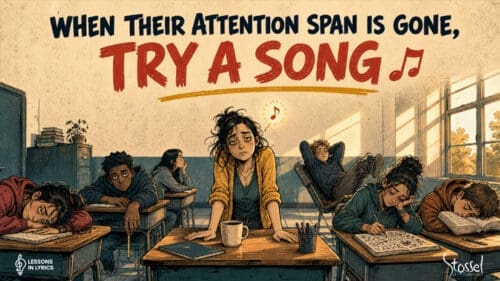
You've earned a little fun. So have your students. The Lessons in Lyrics collection is free, it's short, it's built for exactly this moment in the calendar, and no one has to grade anything at the end.

It's the last week of school. You're staring down field day, the locker cleanout, and the assembly that nobody planned but somehow appeared on the schedule. Your students are checked out. You are checked out. The grading is done, mostly. Everyone is ready.
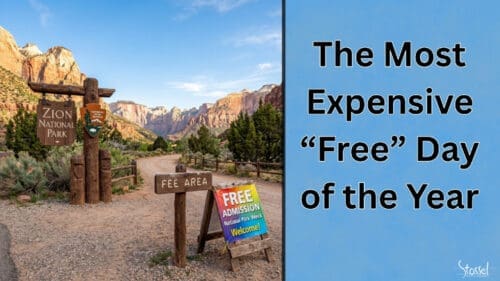
Mark your calendar: April 18 kicks off National Park Week, and entrance fees at every national park in the country are waived. Free admission to Yellowstone. Free admission to the Grand Canyon.

It’s April. Tax season. Somewhere in your students’ homes, a parent is hunched over a laptop, sorting W-2s, muttering about deductions, and wondering how the number at the bottom of the screen got so big.
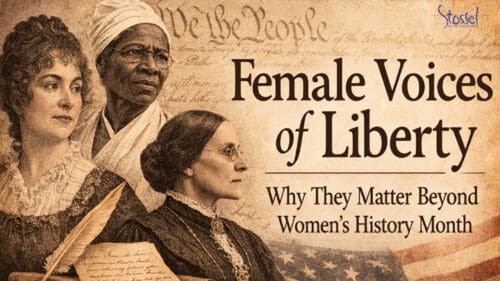
Every document and speech in Voices of Liberty earned its place. But Women’s History Month is the perfect time to notice whose voices are present in that conversation—and whose are absent.
When we launched our recent AI Challenge, we wanted to see how students would use artificial intelligence to explore complex civic and economic questions.

If students are going to use AI anyway, we thought we’d build something that encourages them to use it well: to think critically, challenge what comes back, demand sources, and do their own reasoning. That’s how the AI Challenge was born.
No results found.