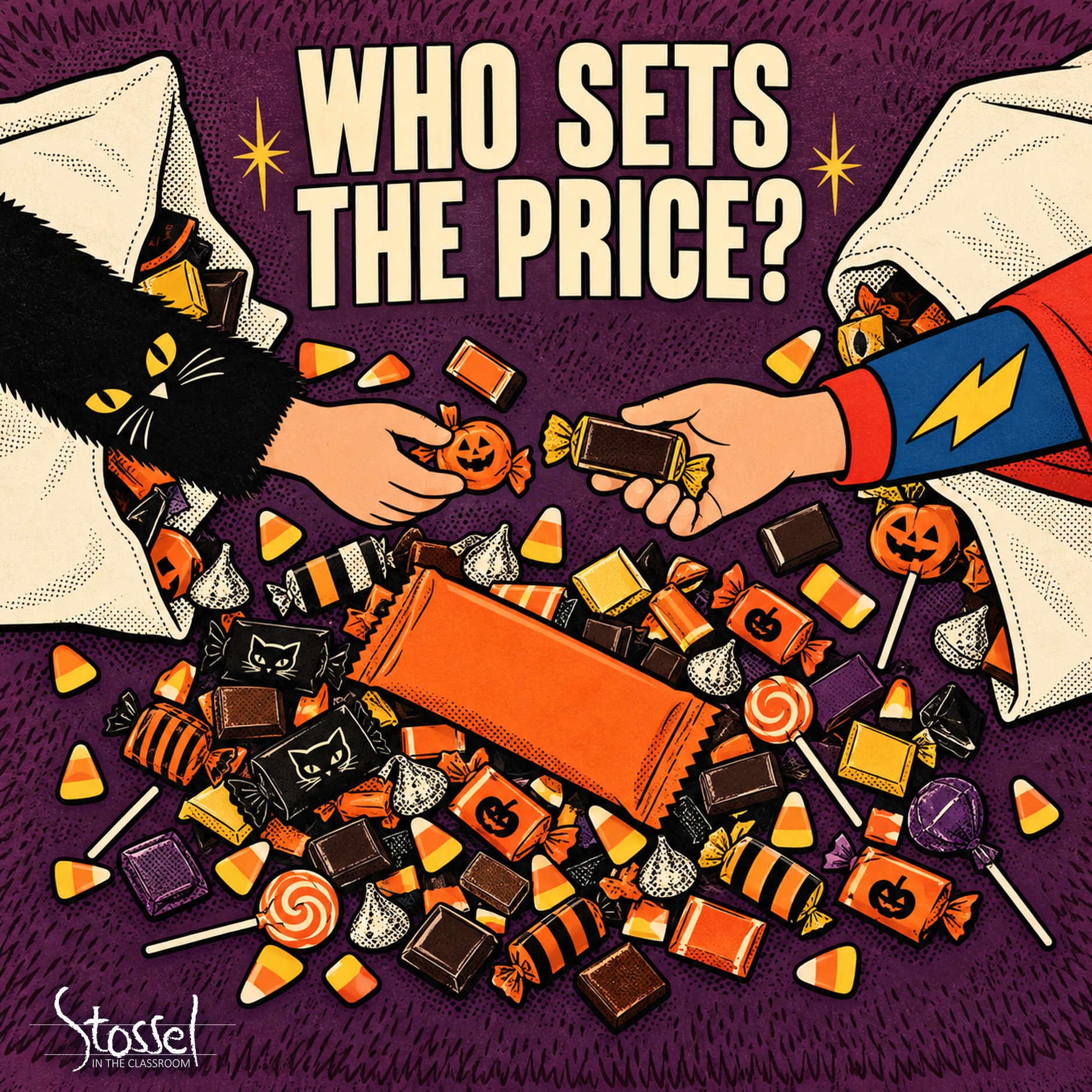
Two children's hands, one in a black cat costume and one in a superhero costume, trade candy over a pile of Halloween treats spilling from pillowcases, under the words “Who sets the price?”

Subscribe Now to Stay in the Loop

Stay updated on new videos, fresh resources, and student contest announcements.


Halloween falls on a Saturday this year. That means your students get a whole evening to trick-or-treat, a whole Sunday to recover, and a whole Monday morning to arrive in your classroom running on leftover chocolate. (Godspeed.)

But before the sugar crash comes the best part of the night. The pillowcases get dumped out on the living room floor, and the trading begins.

Watch a group of ten-year-olds do this, and you’ll see a fully functioning market. Nobody posts a price list. Nobody needs one. Within minutes, everyone knows that a full-size chocolate bar is worth a fistful of the little stuff, that the kid who hates coconut will part with anything coconut for almost nothing, and that candy corn is basically worthless. (I said what I said. 😉)

Who set those prices?

No one. And everyone.

That’s the heart of one of the most important ideas in economics, and since October is Economic Education Month, this is the perfect week to teach it. Prices aren’t numbers someone picks out of thin air. They’re signals. They carry information about what people want, how much of it exists, and what people are willing to give up to get it.

Every trade on that living room floor is two kids, each giving up something he or she values less for something he or she values more. Both walk away better off. Nobody is in charge, and it works anyway.

Your students feel prices every single day. Very few of them have ever stopped to ask where prices come from.

When Someone Else Sets the Price

Now change one rule.

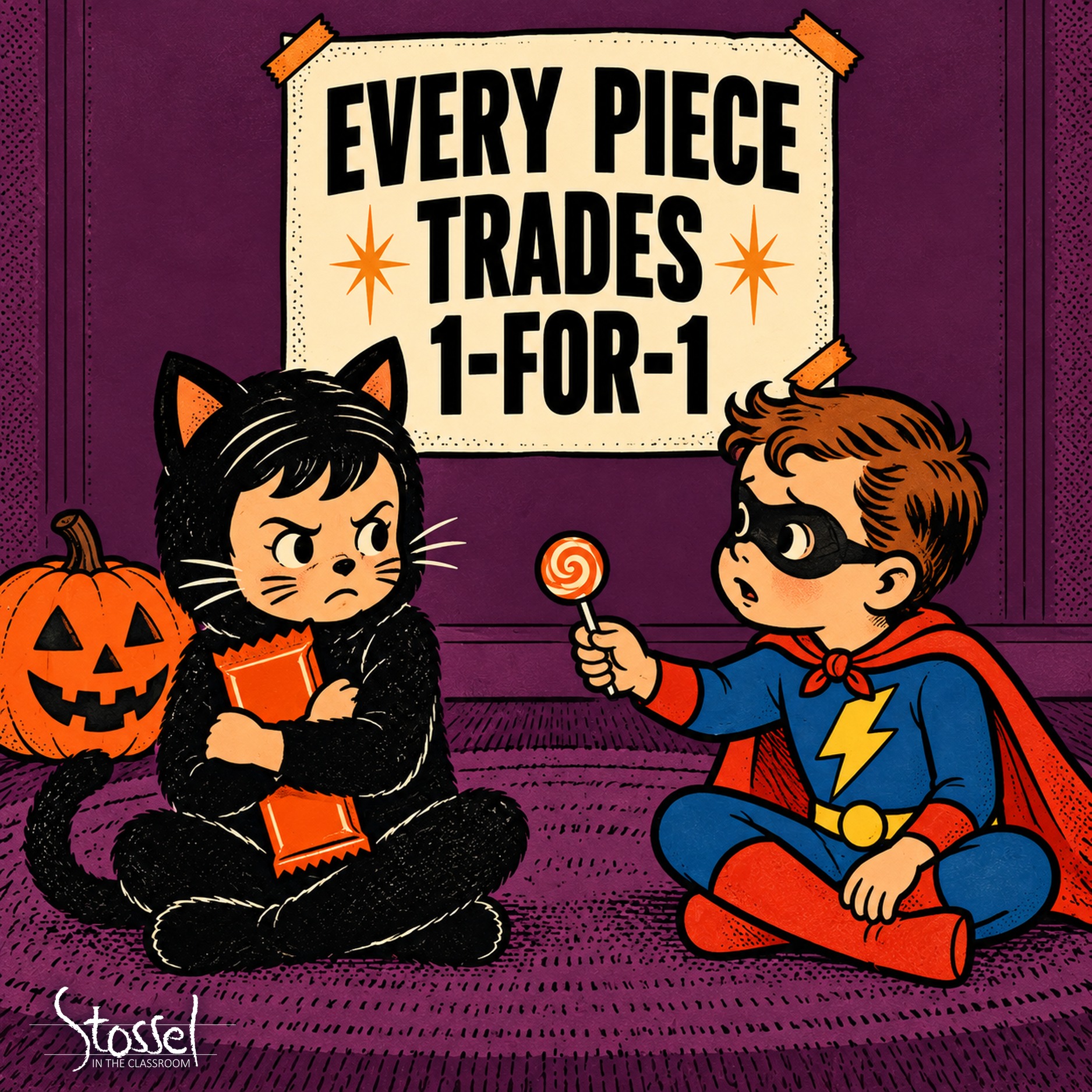
Mom walks in and announces that, to keep things fair, every piece of candy is now worth exactly one other piece. A full-size bar for one lollipop. Take it or leave it.

What happens to the trading?

It stops. Nobody holding a full-size bar is giving it up for a single lollipop. The kid who hates coconut is stuck with it. A rule meant to make things fair just left everyone a little worse off, and it didn’t change how much anyone wanted that chocolate bar.

Students get there on their own in about two minutes. Then they’re ready for a real case.

A child in a black cat costume scowls and hugs a full-size chocolate bar while a child in a superhero costume offers a single lollipop. A sign on the wall behind them reads “Every piece trades 1-for-1.”

SITC.org’s Who Sets Prices? takes the same question out of the living room and into a city. Seattle passed a $26 minimum pay standard for app-based delivery drivers. The goal was simple and sympathetic: pay the people who bring you dinner more money. The video, featuring drivers, customers, and Judge Glock of the Manhattan Institute, traces what happened next.

Delivery prices went up. Customers ordered less. Tips shrank. And drivers ended up no better off.

A law can set a price. It can’t make people keep buying at that price.

That’s a hard idea for students to swallow at first, because the law sounds so kind. Which is exactly why it’s worth teaching. Try opening with the same question the teacher’s guide uses: if a city passed a law saying delivery drivers must be paid more, who do you think would end up paying for that raise? Let them argue. Then show the video.

“Isn’t It Just Greed?”

Some students, and plenty of adults, have a ready answer for why prices go up. Companies are greedy. It’s worth taking that answer seriously instead of waving it away.

A giant piece of candy corn wears a price tag reading “$0.00” above the words “I said what I said.”

“Both Sides: Greedflation Revisited” lets students do exactly that. It pairs a PBS News segment arguing that corporations used inflation as cover to raise prices and pad their profits with a Reason video arguing that the claim rests on cherry-picked data. Students weigh the evidence and decide which argument holds up better.

Along the way, they learn how the choice of time frame or chart scale can change the story a graph appears to tell. That’s a skill they’ll need every time a chart shows up in their social media feeds.

The Hardest Case

Outlawing Price Gouging takes the question to its toughest test. What about prices that spike during a hurricane or a blizzard?

Most students’ gut answer is that it should be illegal. The video, drawing on Nobel Prize-winning economist Milton Friedman, asks them to slow down and think it through. What do high prices actually do during an emergency? Who decides to haul generators and bottled water into a disaster zone, and why? What happens to the supply when the price is capped?

Students don’t have to end up agreeing with Friedman. They do have to wrestle with the question. That’s the point.

Try This on Friday, October 30: The Candy Market

This takes fifteen to twenty minutes, and it might be the most fun you’ll have all week.

Give each student a small bag with three or four assorted pieces of candy. Mix them up so no two bags match. (If your school doesn’t allow food, index cards labeled with candy names work fine.)

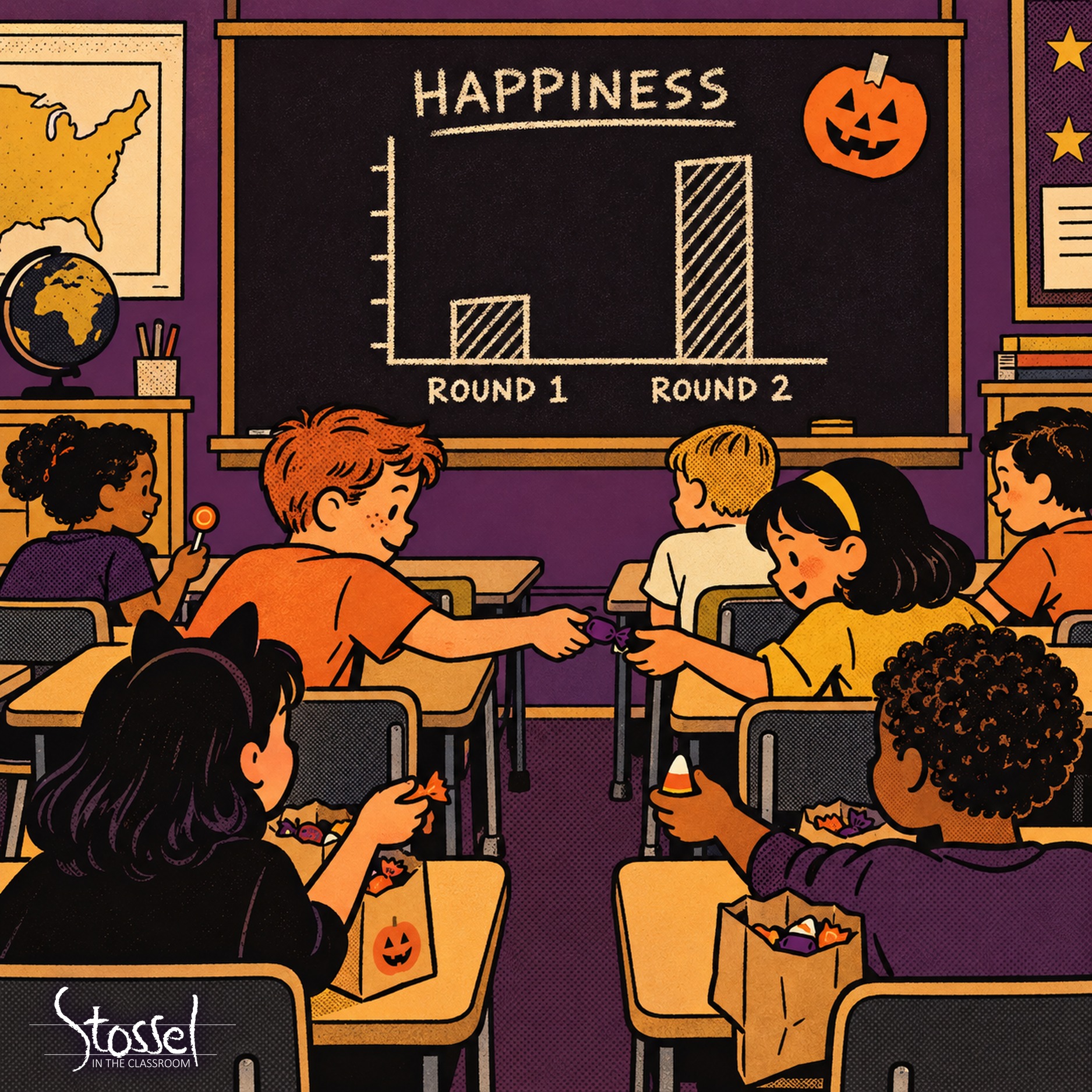
  1. Round one: Before any trading, each student rates how happy he or she is with the bag on a scale of 1 to 10. Add up the class total and write it on the board.
  2. Round two: Open trading for five minutes. Any trade is allowed, as long as both people agree to it. Then rate happiness again and record the new total.
  3. Round three: Announce a fixed price. Every piece trades one-for-one, no exceptions. Open trading for three more minutes and count how many trades actually happen.

Students at their desks swap candy from small paper bags. On the chalkboard, a bar chart titled “Happiness” shows a short bar for Round 1 and a much taller bar for Round 2.

Then debrief:

  • If the class total went up in round two, where did the extra happiness come from? Nobody got any new candy.
  • Who set the “prices” in round two?
  • What happened to trading in round three? Who was hurt most by the fixed price?
  • How is the one-for-one rule similar to Seattle’s minimum pay standard? How is it different?
  • Is there any situation where a fixed price would be the fairer choice?

That first question is the one to linger on. When students realize that voluntary trade made the whole class better off without creating a single new piece of candy, something clicks. Value isn’t just in the stuff. It’s in getting the stuff to the person who wants it most.


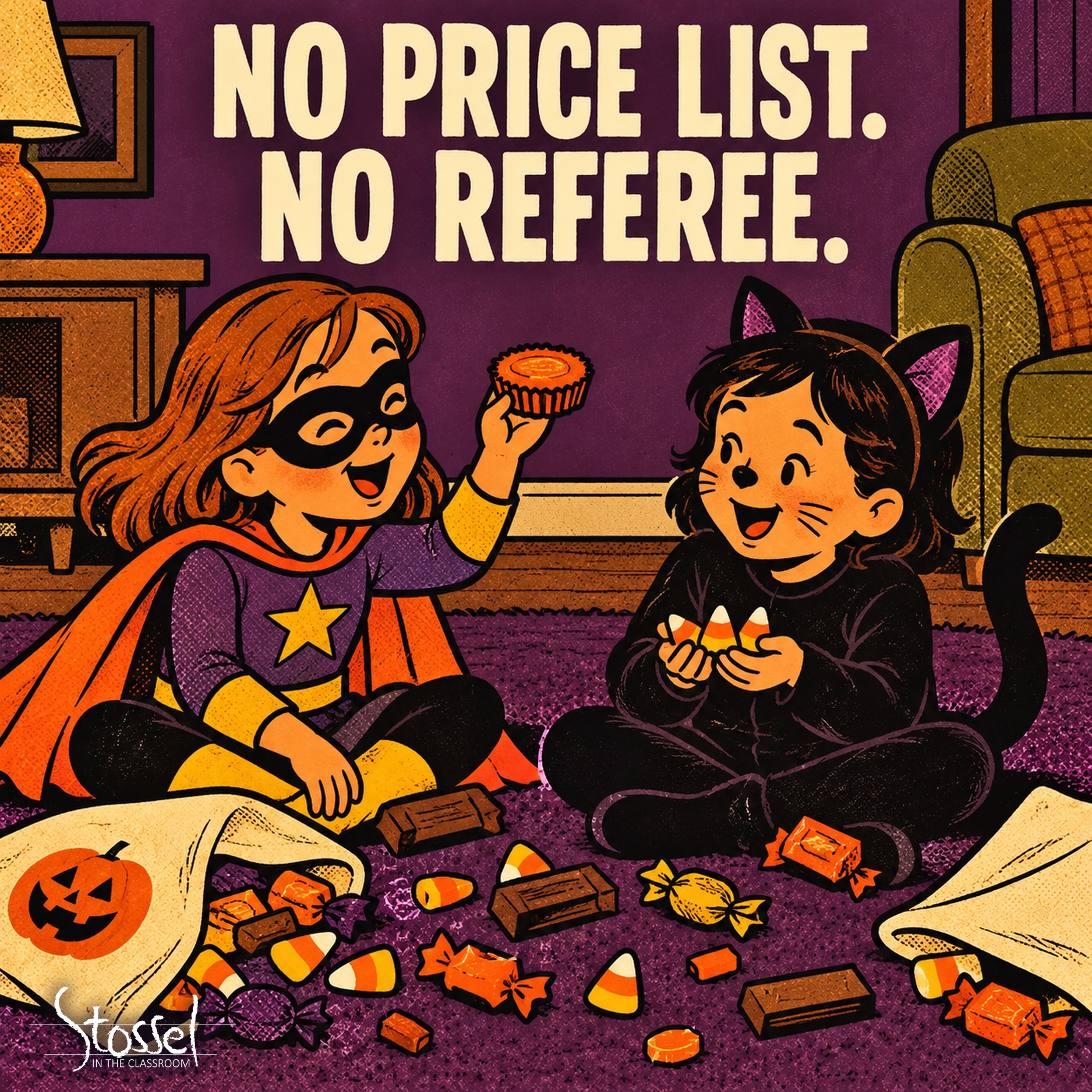
No Price List, No Referee

On Saturday night, somewhere in your students’ neighborhoods, a nine-year-old will trade three pieces of candy corn for one peanut butter cup and think she won.

A girl in a superhero costume grins as she holds up a peanut butter cup, while a child in a black cat costume happily holds three pieces of candy corn. Above them are the words “No price list. No referee.”

She did. And so did the kid on the other side of the trade, the one who actually likes candy corn. (They exist. Allegedly.)

No price list. No referee. Just two people, each giving up something for something they want more. That’s a market economy, sitting on a living room floor in a superhero costume.

Teach your students to see it, and they’ll start seeing it everywhere: at the gas pump, in a delivery app, and in the next headline that blames high prices on greed. They’ll start asking the questions that matter. Who set this price? And what happens when someone tries to change it?

Happy Halloween. Hide the good candy.