
Quick Resources: Lessons in Lyrics “Incentives Matter” & “No Such Thing as a Free Lunch,” Why Government Can’t Build Things
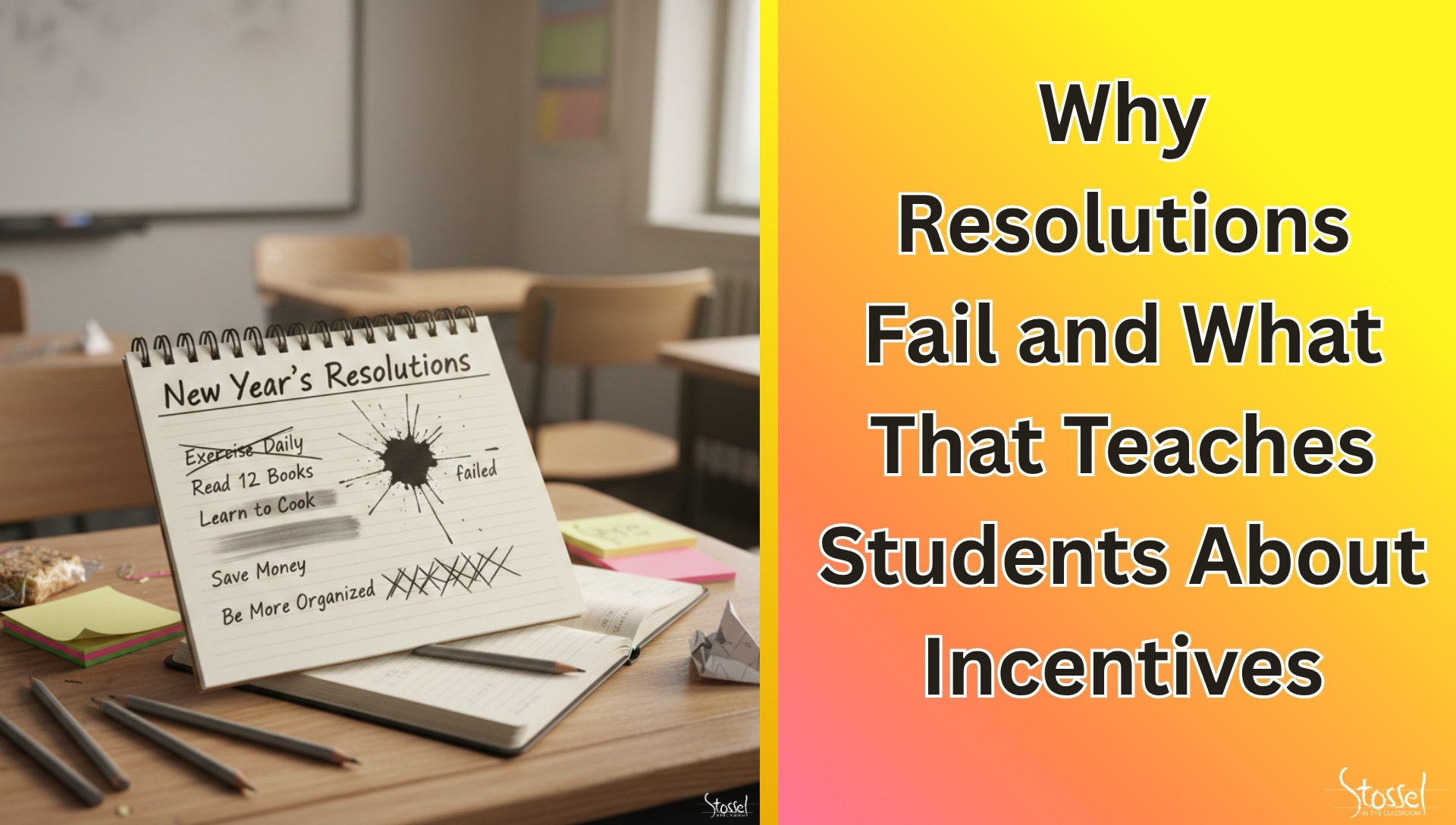
January brings a fresh semester, clean notebooks, and the annual tradition of big promises:
“This year I’ll keep up with my homework.”
“I’m going to stop doomscrolling before bed.”
“I’m finally going to save money instead of spending it all at the mall.”
Students (and adults!) make resolutions with genuine hope. But within a few weeks, most of those commitments quietly dissolve. Teachers see this play out every year, and it’s tempting to chalk it up to laziness or lack of discipline.
But economists would tell us something different…and far more useful.
Resolutions don’t fail because people are weak. Resolutions fail because incentives don’t change.
Subscribe Now to Stay in the Loop
Stay updated on new videos, fresh resources, and student contest announcements.
That simple insight can turn the post-holiday slump into one of the most powerful economics lessons of the year.
The Economics Behind Failed Resolutions
Humans respond to incentives—always.
Not intentions.
Not inspiration.
Not the feeling of a new calendar year.
If the incentives remain exactly the same as they were in December, the behavior will remain the same too.
Here’s what students run into:
✔ Immediate costs vs. delayed rewards
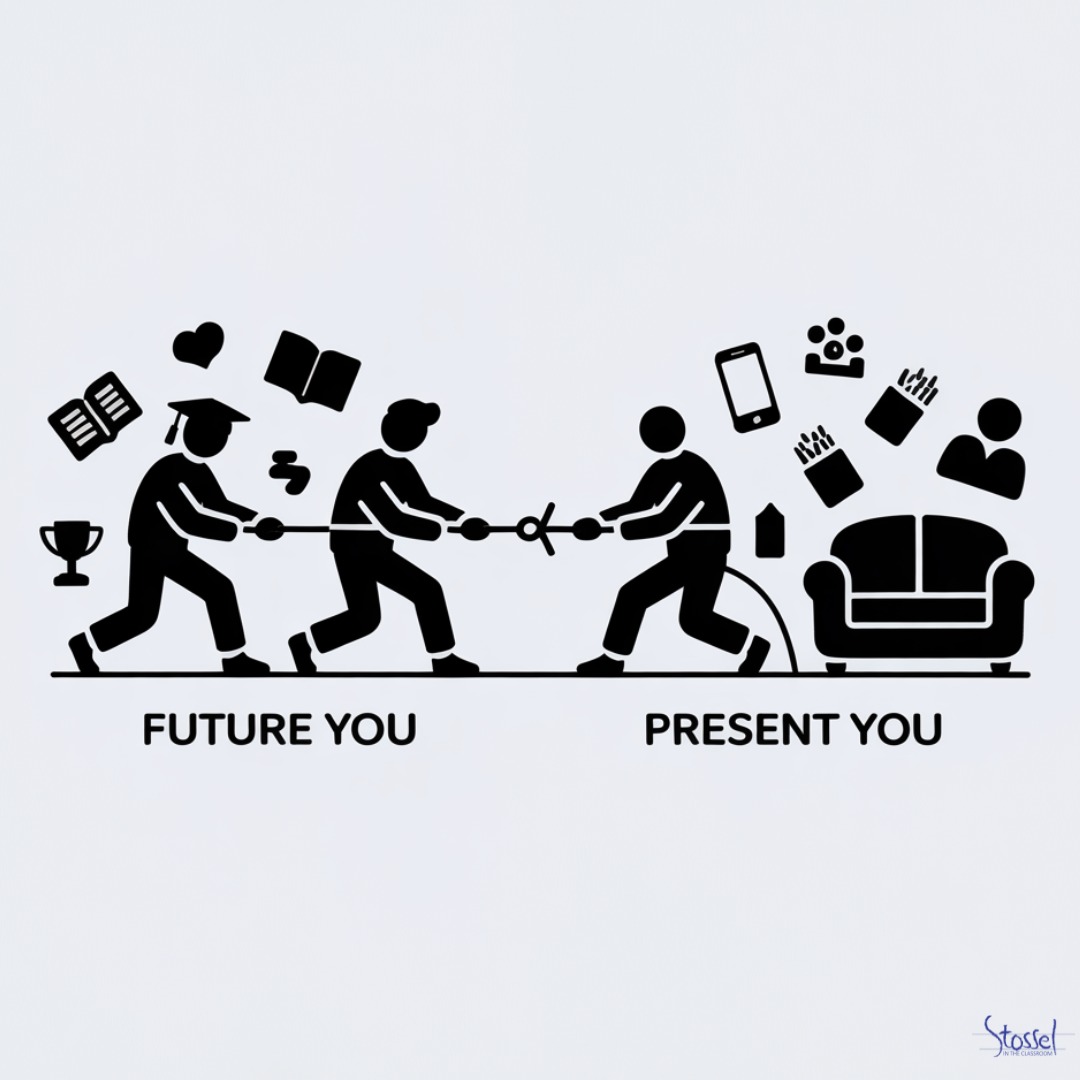
Studying tonight is painful. Getting a good grade later is abstract.
Economists call this time inconsistency—we value the present much more than the future.
✔ Invisible incentives baked into old habits
Scrolling TikTok gives instant stimulation. Reading gives long-term benefits. Which wins? The one with the quicker reward.
✔ Social incentives that pull the other way
If a student’s friend group mocks effort, the incentive to improve shrinks dramatically.
✔ Systems that reward the wrong behaviors
If late work is accepted without consequence, it may be rational (not lazy!) for students to procrastinate.
January is the perfect month to teach this: students are personally experiencing the tension between their goals and their incentives.
Connect the Dots with SITC’s “Incentives Matter”
SITC’s Lessons in Lyrics – “Incentives Matter” is tailor-made for this moment.

The videos help students understand:
- every choice has a cost
- incentives influence behavior more than good intentions
- systems matter
- trade-offs shape outcomes
You can show the songs and then relate every element back to resolutions:
- What is the actual cost of your resolution?
- What rewards are you expecting—and when do they arrive?
- Which old incentives are still pulling you backward?
- What would have to change for your resolution to succeed?
When students see incentives clearly, the idea of “try harder” gets replaced with “set up the incentives correctly.”
That’s real economics at work.
Real-World Examples Students Immediately Understand
January gives you a built-in list of relatable case studies:
- Gym Membership Economics
Every January, gyms sell more memberships than they have capacity for.
Why? They know most eager customers won’t show up by March.
Teaching point:
Businesses respond to predictable incentive patterns.
Human behavior—even broken resolutions—is something markets anticipate.
- “Free Trials” Aren’t Free
Students often sign up for a “free month” of a subscription.
The company is betting on one thing: students forgetting to cancel.
Teaching point:
When the cost is delayed and the benefit is immediate, behavior becomes predictable—and companies design incentives around it.
Use Lessons in Lyrics “No Such Thing as a Free Lunch” to demonstrate the principle that someone always pays, somehow, when something is offered as “free.”
- Government Incentives Work Differently
SITC’s Why Government Can’t Build Things demonstrates a powerful contrast.
In the private sector:
- profit and loss signal whether you’re meeting customer needs
- bad decisions cost you money
In governments:
- budgets often increase even when projects underperform
- incentives emphasize spending the money, not saving it
- there’s no profit-and-loss feedback loop
Classroom connection:
Resolutions fail because incentives don’t shift.
Government inefficiencies persist for the same reason.
Students love drawing parallels between personal behavior and public policy.
Classroom Activity: Create a “Resolution Incentive Map”
This can be a 10–15 minute activity that sparks great conversation.
- Choose a resolution (personal or hypothetical).
- List the incentives working FOR the goal:
- better grades
- more free time later
- parental approval
- long-term health
- List the incentives working AGAINST the goal:
- immediate comfort
- easier entertainment
- no short-term consequences
- Circle the incentives that matter most (students often choose immediate ones).
- Ask:
“Based on these incentives, which behavior is the most rational?”
Suddenly, “I failed” turns into “The incentive structure wasn’t set up for success.”
This reframing is enormous for teenagers.
It removes shame and replaces it with economic understanding—something they can actually use.
Add a Mini Video Pairing for Extra Depth
Here are two optional SITC connections that can deepen the lesson:
🌟 “Why Government Can’t Build Things”
Use it to illustrate how outcomes follow incentives—whether in personal habits, businesses, or government agencies.
🌟 “Creative Destruction”
Perfect for talking about how old habits (or old industries) fade when newer, better incentives arise.
This widens the lesson from self-improvement to genuine economic literacy.
Why January Is the Perfect Time to Teach This
Students are already reflecting.
They’re already comparing their goals to their reality.
They’re already wrestling with habits and motivation.
When you show them the economics behind it, you’re not just helping them understand incentives—you’re giving them tools to change their lives.
And best of all, these lessons stick because they are grounded in something personal, immediate, and real.
Resolutions don’t fail because students don’t care.
They fail because incentives matter more than intentions.
That’s a lesson worth learning every year.