
It’s April. Tax season. Somewhere in your students’ homes, a parent is hunched over a laptop, sorting W-2s, muttering about deductions, and wondering how the number at the bottom of the screen got so big. Your students may not file taxes yet, but they understand the basic deal: the government provides services, and citizens pay for them.
But here’s a question most financial literacy lessons never ask: What happens when the government takes your property — and you haven’t even been charged with a crime?
Not a hypothetical. Not a history lesson about colonial-era grievances. This is happening right now, in the United States, to ordinary people.
Subscribe Now to Stay in the Loop
Stay updated on new videos, fresh resources, and student contest announcements.
April is also Financial Literacy Month, and classrooms across the country will roll out lessons on budgeting, saving, and compound interest. All good stuff. Essential, even. But real financial literacy runs deeper than balancing a checkbook. It includes understanding property rights — what you own, what protections you have, and what happens when those protections fail. Most financial literacy curricula skip this entirely. They teach students how to earn and save money, but not what legal protections exist (or don’t exist) to keep it.
That’s where this gets interesting for your students. And a little unsettling for all us.
What Is Civil Asset Forfeiture?
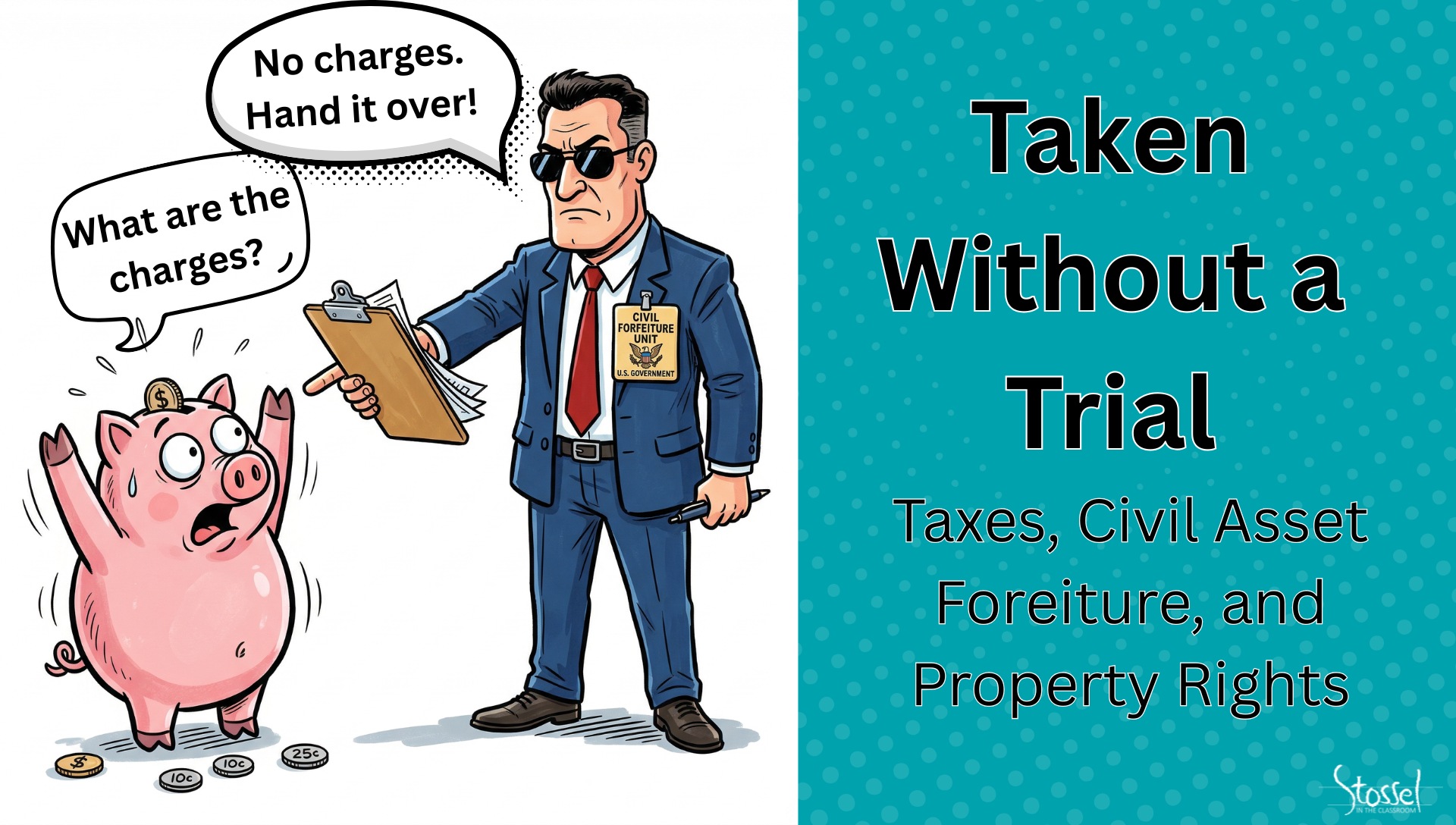
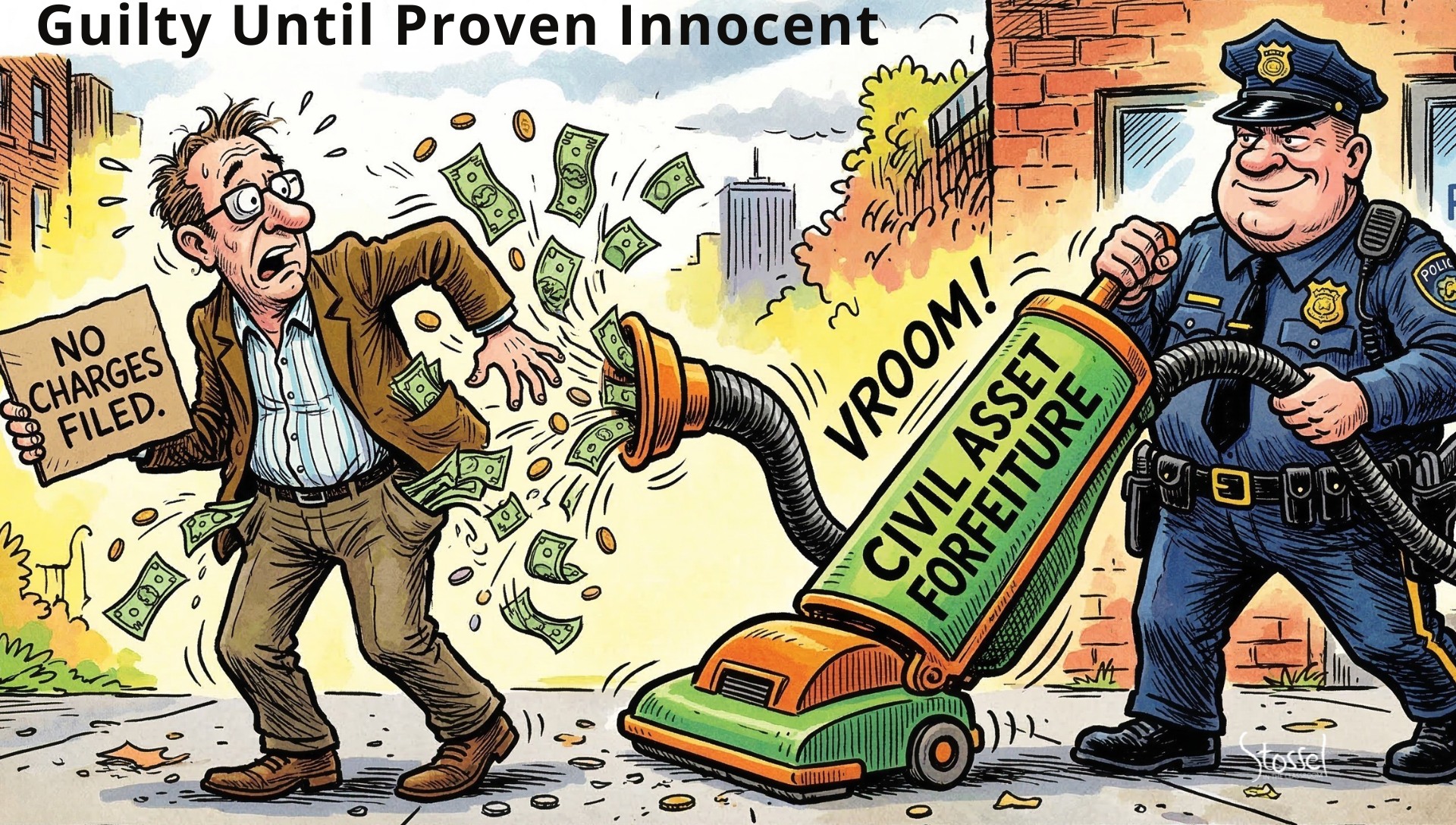
Civil asset forfeiture is the legal process that allows law enforcement to seize cash, cars, homes, and other property if officers believe it’s connected to criminal activity. The catch? The property owner doesn’t have to be convicted of a crime. In many states, he or she doesn’t even have to be charged with one. The case is filed against the property itself, not the person. (Yes, this means case names such as “United States v. $35,651.11” are real.)
The burden of proof often falls on the owner to prove innocence, flipping one of the most fundamental principles of U.S. law on its head. And here’s the detail that tends to make students’ jaws drop: in most states, the agencies that seize the property get to keep all or part of the proceeds.
Think about the incentive structure there. (Your economics students should spot it immediately.)
Three Videos, One Big Lesson
SITC.org’s newest video, When Cops Become Robbers, tells the story of Mandrel Stuart, a Virginia restaurant owner whose cash was seized during a traffic stop. He was never charged with a crime but getting his money back took more than a year and cost him his business. The video traces how civil asset forfeiture works, who it affects, and why reform efforts keep stalling — a story that connects government power, due process, and the real-world consequences of misaligned incentives.
Pair it with Mow Your Lawn or Lose Your House!, which follows a Florida homeowner facing the loss of his home over code violations, and Stealing Homes, about local governments seizing homes over a single missed tax payment. Three different stories, three different mechanisms, one common thread: ordinary people losing property through processes that offer shockingly little protection. Together, these videos paint a picture students won’t forget — property rights aren’t abstract principles in a textbook. They’re the difference between keeping what you’ve earned and losing it to a system that doesn’t require proof of wrongdoing.
A Bipartisan Problem — and a Classroom Opportunity
This isn’t a partisan issue, and that’s a huge strength as a classroom topic. Reform efforts have drawn bipartisan support at both the state and federal levels. In February, the FAIR Act — the Fifth Amendment Integrity Restoration Act — was reintroduced in Congress with both Republican and Democratic co-sponsors. Several states have recently raised the burden of proof required for forfeiture or now require a criminal conviction before the government can keep seized property. Washington state overhauled its forfeiture laws effective January 2026, and other states are considering similar reforms.
The debate itself is a teaching opportunity. Students can examine competing values: effective law enforcement versus individual rights. Public safety versus due process. The government’s need for tools to fight crime versus the risk that those tools get used against people who’ve done nothing wrong.
For teachers looking for a framework to structure that conversation, Lessons in Lyrics: Rule of Law helps students explore why consistent, fair rules matter — and what happens when the rules don’t apply equally to everyone.
Discussion Starters
Here are a few questions to get the conversation going:
- If the government believes your property is connected to a crime, should it be allowed to take that property before you’ve been convicted? Why or why not?
- When law enforcement agencies get to keep the property they seize, how might that affect their decisions about what to seize?
- The Fourth Amendment protects against “unreasonable searches and seizures.” Does civil asset forfeiture violate that protection? What would the other side argue?
- Some people argue that forfeiture is essential for fighting drug trafficking and organized crime. Others say the costs to innocent people are too high. How would you weigh those trade-offs?
The Whole Picture
Tax Day is April 15. Your students will hear about it. Some will grumble. Some will shrug. Most will absorb the basic lesson: the government collects money to pay for things we all use.
That’s a fine starting point. But it’s not the whole picture.
The whole picture includes what happens when the system meant to protect us takes more than it should. Not through taxes agreed upon by elected representatives but through a legal process most Americans have never heard of, applied to people who may have done nothing wrong. As the U.S. marks its 250th anniversary this year, that’s a conversation worth having, about the principles the founders fought for, and whether we’re still living up to them.
That’s not a budgeting lesson. That’s a civics lesson. And it’s one your students are ready for.