
Quick Tip: Use SITC’s Voices of Liberty and Undivide Us
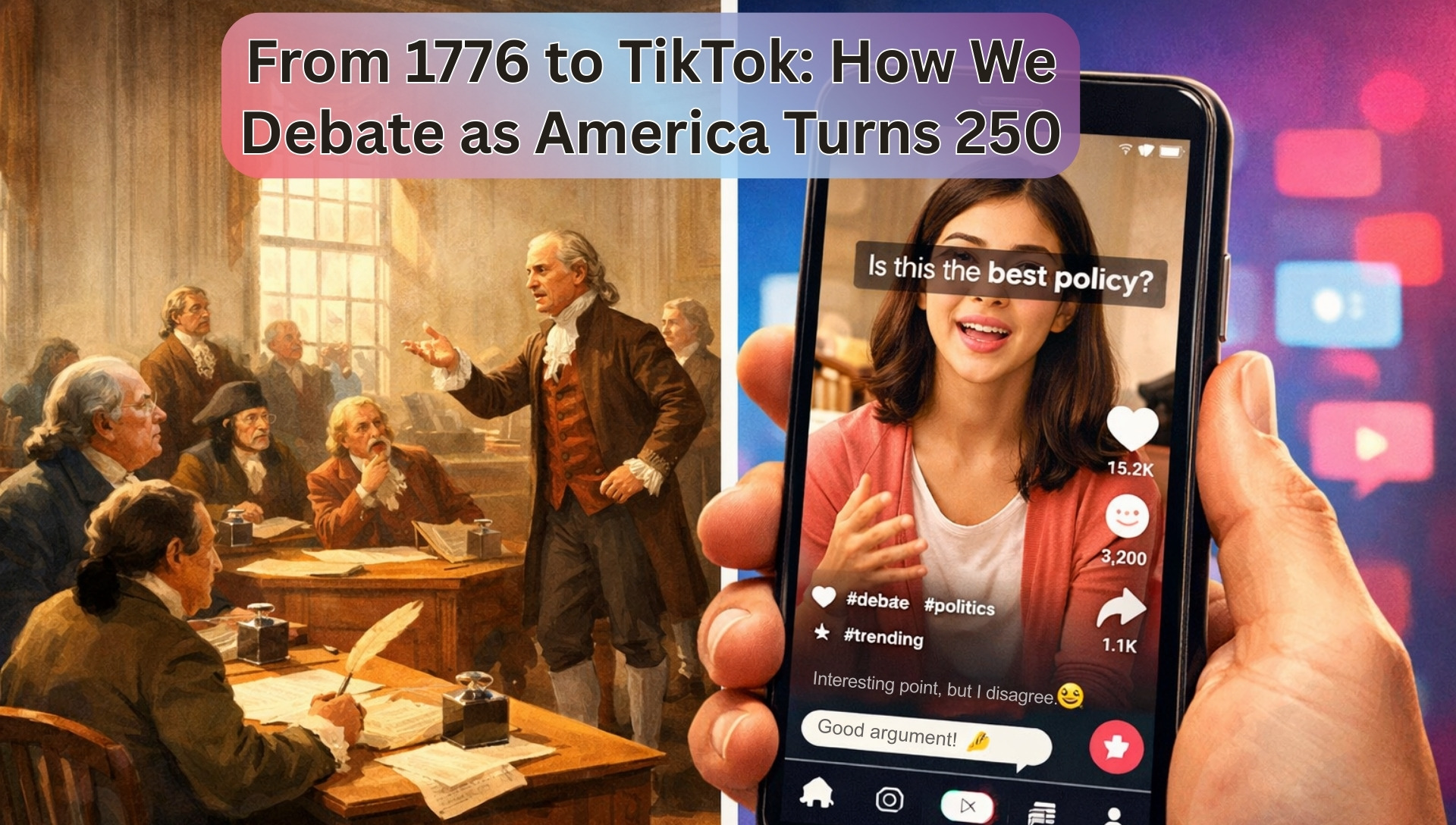
Imagine dropping Thomas Jefferson, Frederick Douglass, Martin Luther King Jr., and Ronald Reagan into a group chat.
It would be chaos. Beautiful, passionate, wildly opinionated chaos.
One thing’s for sure:
They would debate — energetically — but they would not stop talking.
As America approaches its 250th anniversary, that might be the part of our civic heritage we need the most. Yes, we inherited founding documents, rights, and institutions. But we also inherited a tradition of discussion: fiery pamphlets, spirited speeches, public letters, debates, counter-debates, and disagreement that didn’t automatically end relationships.
Subscribe Now to Stay in the Loop
Stay updated on new videos, fresh resources, and student contest announcements.
What we did not inherit was this modern fear that disagreement means you must unfriend, unfollow, or assume the worst about someone.
Somewhere along the way, we lost the ability to say:
“I think you’re wrong — but I’m listening.”
And if the Founders could see our comment sections? They’d probably ask, “What happened to the part where we talk to each other?”
America at 250: A Perfect Time to Reclaim Civil Conversation
Students today are growing up in a world where people often treat disagreement like a threat. But the Founders? They treated disagreement like a tool — a way to refine ideas, check power, and build something stronger together.
The Declaration of Independence?
A very pointed disagreement.
The Constitution?
A negotiated, line-by-line disagreement.
Federalist #10?
James Madison saying, essentially:
“Look, factions are inevitable. So let’s figure out how to manage them.”
Fast-forward 250 years, and many of the same questions still echo in classrooms:
- What do we do when we disagree?
- How do we talk about hard issues without blowing up friendships?
- How do diverse people make decisions together?
We can’t expect students to navigate a polarized world without tools.
We have to teach them how to talk — and listen — across differences.
That’s where two powerful resources come in:
Undivide Us and Voices of Liberty, connected by a classroom technique that changes everything.
Modeling Better Conversations: Why Undivide Us Resonates
One of the most important videos we share is Undivide Us, created by another organization but deeply aligned with SITC’s mission. It highlights something simple and radical:
Assume the person who disagrees with you is reasonable, not evil or ignorant.
“Too often we become entrenched in our own views, in our own echo chambers…We see each other as enemies rather than fellow citizens.” — Ben Klutsey
That idea alone can transform a discussion.
In a 250th anniversary year — when we’re reflecting not just on where we’ve been, but who we want to be — modeling respectful conversation is essential.

A Classroom Technique That Works: “In the Other Person’s Shoes”
To help teachers put this into practice, we created the In the Other Person’s Shoes discussion method — a structure specifically designed to reduce polarization and increase empathy.
The ground rules?
- No name-calling
- No demonizing
- No raised voices
- Focus on ideas, not people
- Assume the other person is reasonable (even if you disagree completely)
Using colored construction paper cards and a “1, 2, 3, reveal!” moment, students visibly show their stance on a question. But the magic comes next:
They must explain why another specific person might hold the opposite viewpoint.
Not defend themselves.
Not argue.
Not “win.”
Just understand.
The student being described listens without reacting, then shares:
- what the explainer got right
- what they want others to understand about their view
It’s structured, safe, humanizing — and shockingly effective.
The full lesson plan includes process steps, prompts, and examples.
This technique doesn’t erase differences.
It makes space for them.

Connecting Past and Present with Voices of Liberty
Once students can talk to each other respectfully, they’re ready for the deeper dive:
What did disagreement look like throughout American history?
That’s where Voices of Liberty shines.
This curated collection of primary documents gives students both the original text and a modern translation, making the Founders’ debates accessible without losing authenticity. It includes:
- The Declaration of Independence
- Thomas Paine’s Common Sense
- The Constitution (Preamble, Bill of Rights, select amendments)
- Federalist #10
- Anti-Federalist #14
- George Washington’s Farewell Address
- Frederick Douglass’s 1852 speech
- Martin Luther King Jr.’s “I Have a Dream”
- Ronald Reagan’s “A Time for Choosing”
When students read these voices side by side, they see:
- Madison worried about factions tearing the country apart.
- Washington feared political parties might undermine unity.
- Douglass challenged America to live up to its founding promises.
- King connected the Declaration directly to civil rights.
- Reagan wrestled with questions of government power and responsibility.
Suddenly, students realize that the issues we debate today — freedom, fairness, representation, justice — didn’t suddenly show up. They’re part of a conversation stretching across generations.
Voices of Liberty helps students understand that they’re stepping into a 250-year dialogue, not starting from scratch.
Bringing It All Together: A 250th Anniversary Classroom That Works
Here’s one way to build a powerful 2026-ready unit:
- Start with Undivide Us.
Let students see the model of respectful disagreement. - Teach “In the Other Person’s Shoes.”
Give them the structure to discuss tough issues safely and thoughtfully. - Introduce Voices of Liberty.
Anchor modern discussions in historical debates. - Invite reflection and debate.
Ask questions like: - What might Madison say about TikTok and factions?
- How would Washington feel about today’s political parties?
- What would Douglass think about America at 250?
- How might MLK revise his dream today?
- Celebrate the civic journey.
With a debate, a “Liberty Toast,” or a student panel on “How we talk — and disagree — as Americans.”
Because the truth is:
America doesn’t need less debate. It needs better debate.
And as the nation turns 250, helping students relearn how to talk to one another might be one of the most patriotic things we can do.