The Real Classroom Opportunity
Here’s where Voices of Liberty becomes a launchpad instead of just a resource.
Use the collection as your anchor. Have students read the Declaration excerpt, then Douglass, then King. By now they can see the pattern: each speaker holds America accountable to its own stated principles.
Then ask: Who else made this argument?
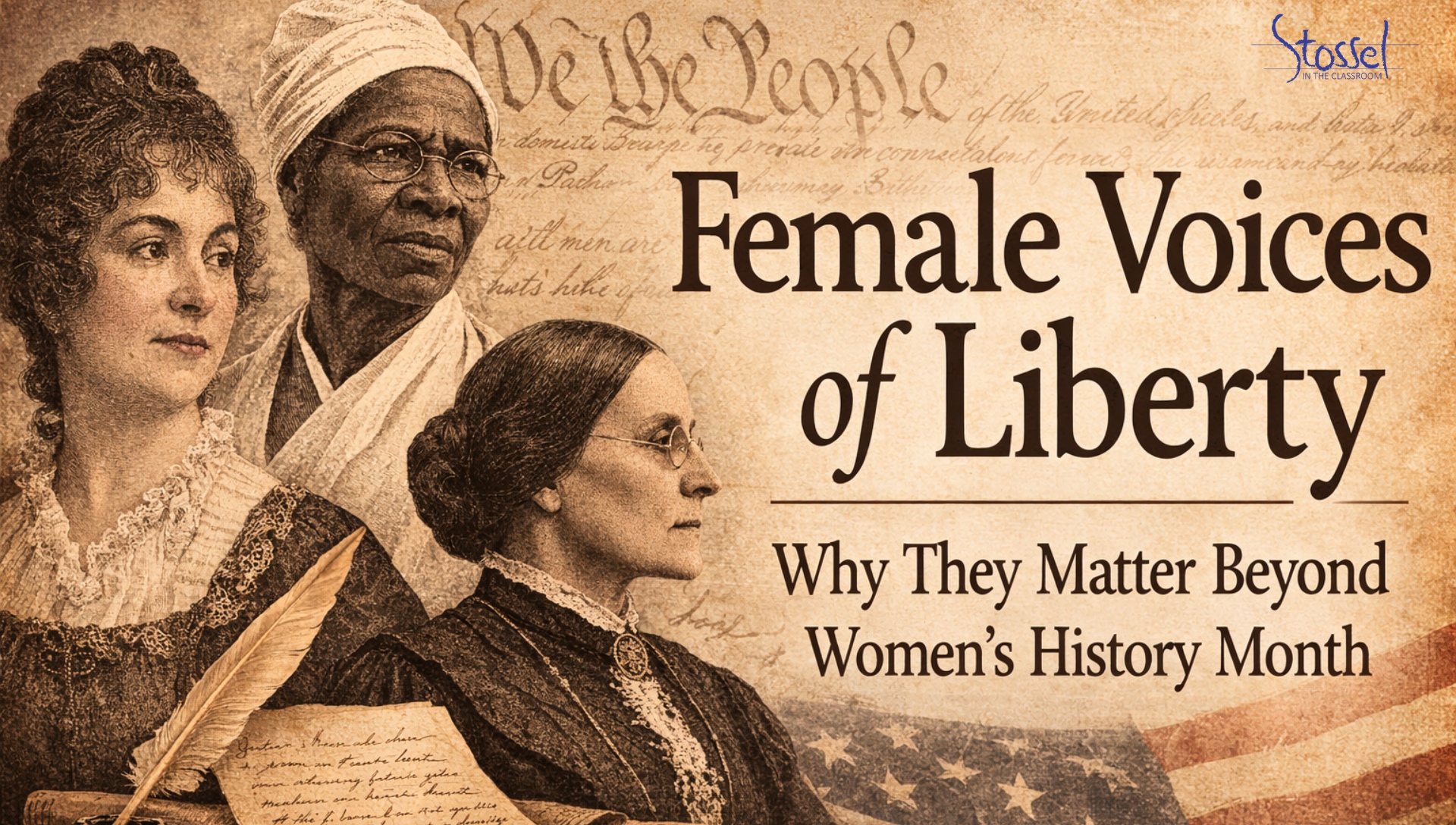
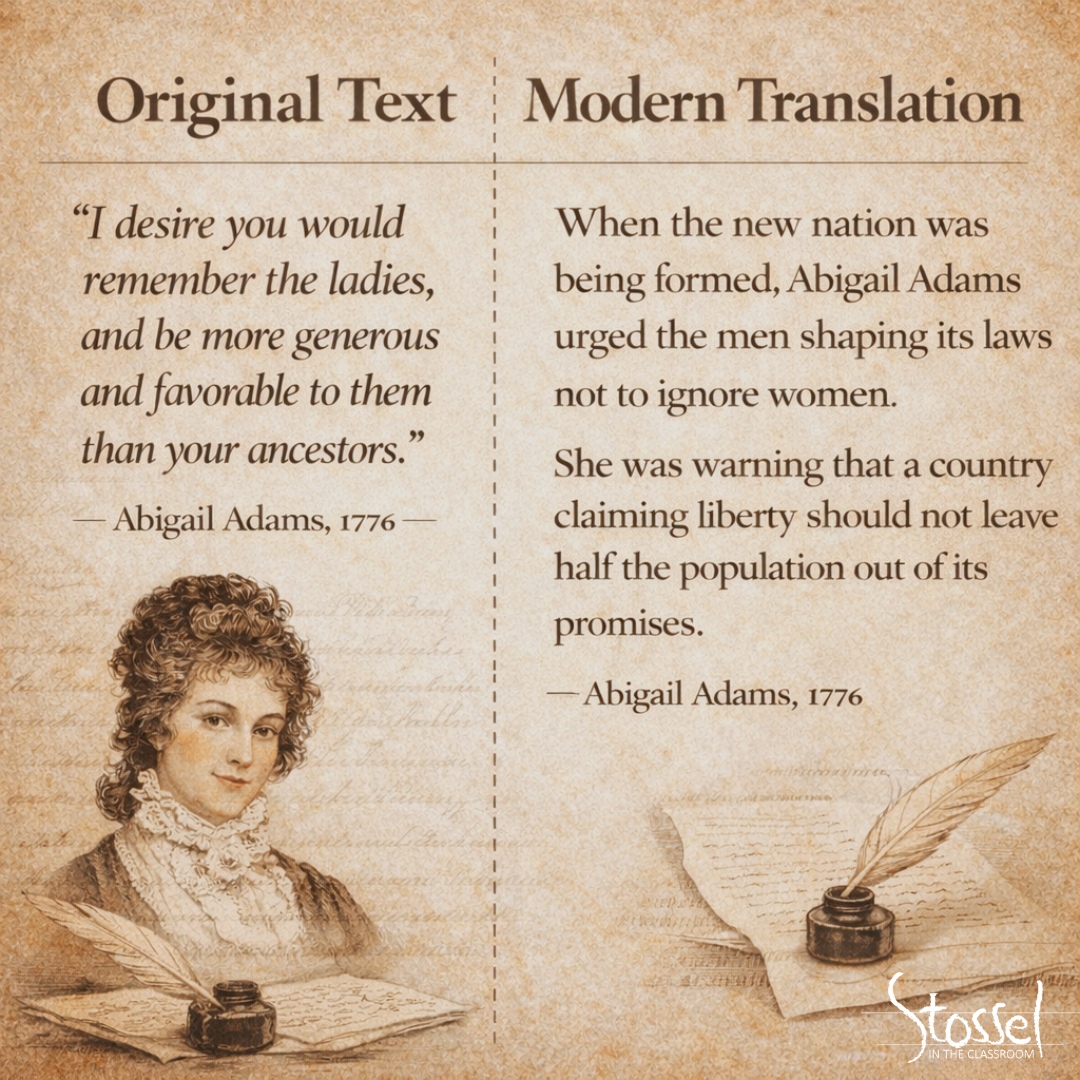
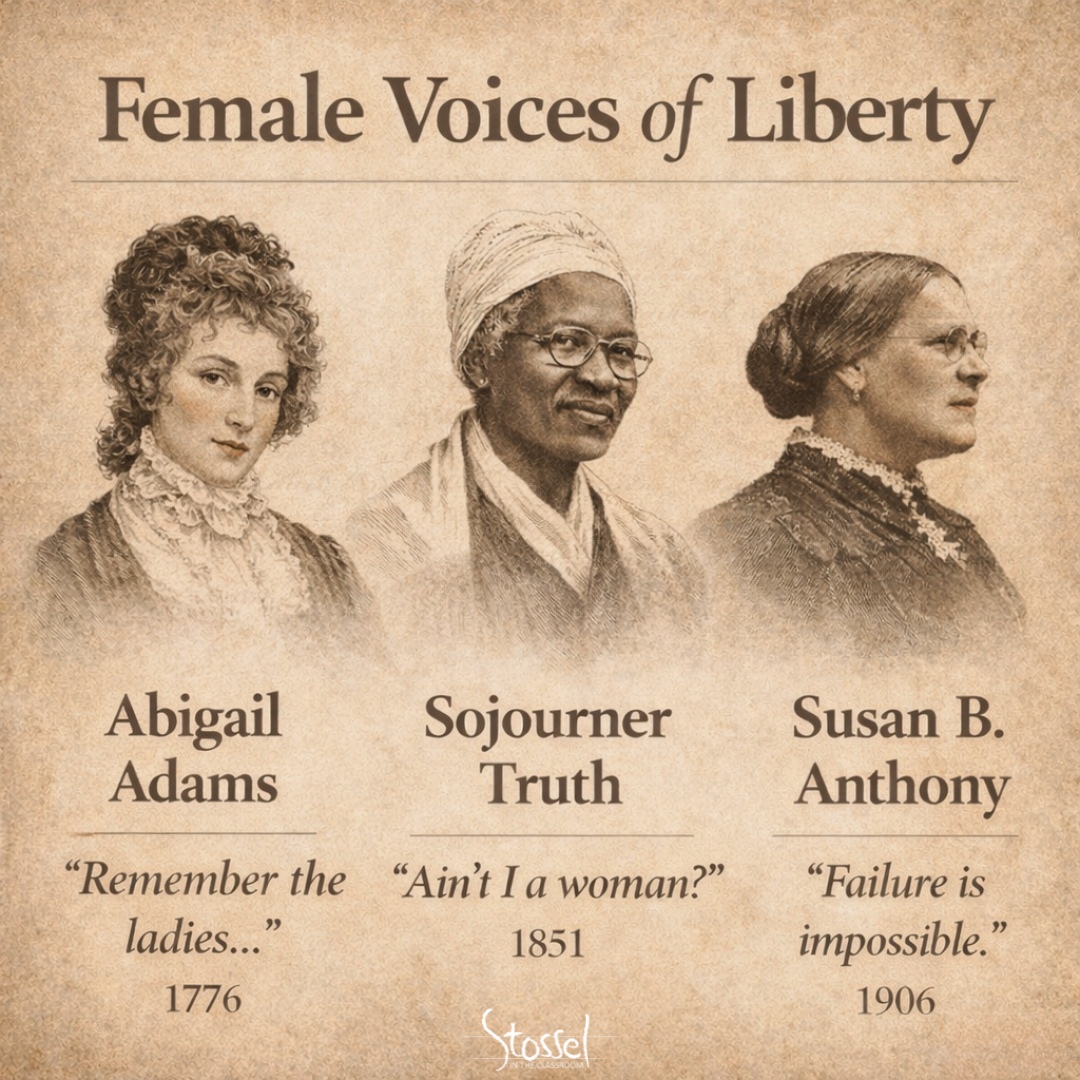
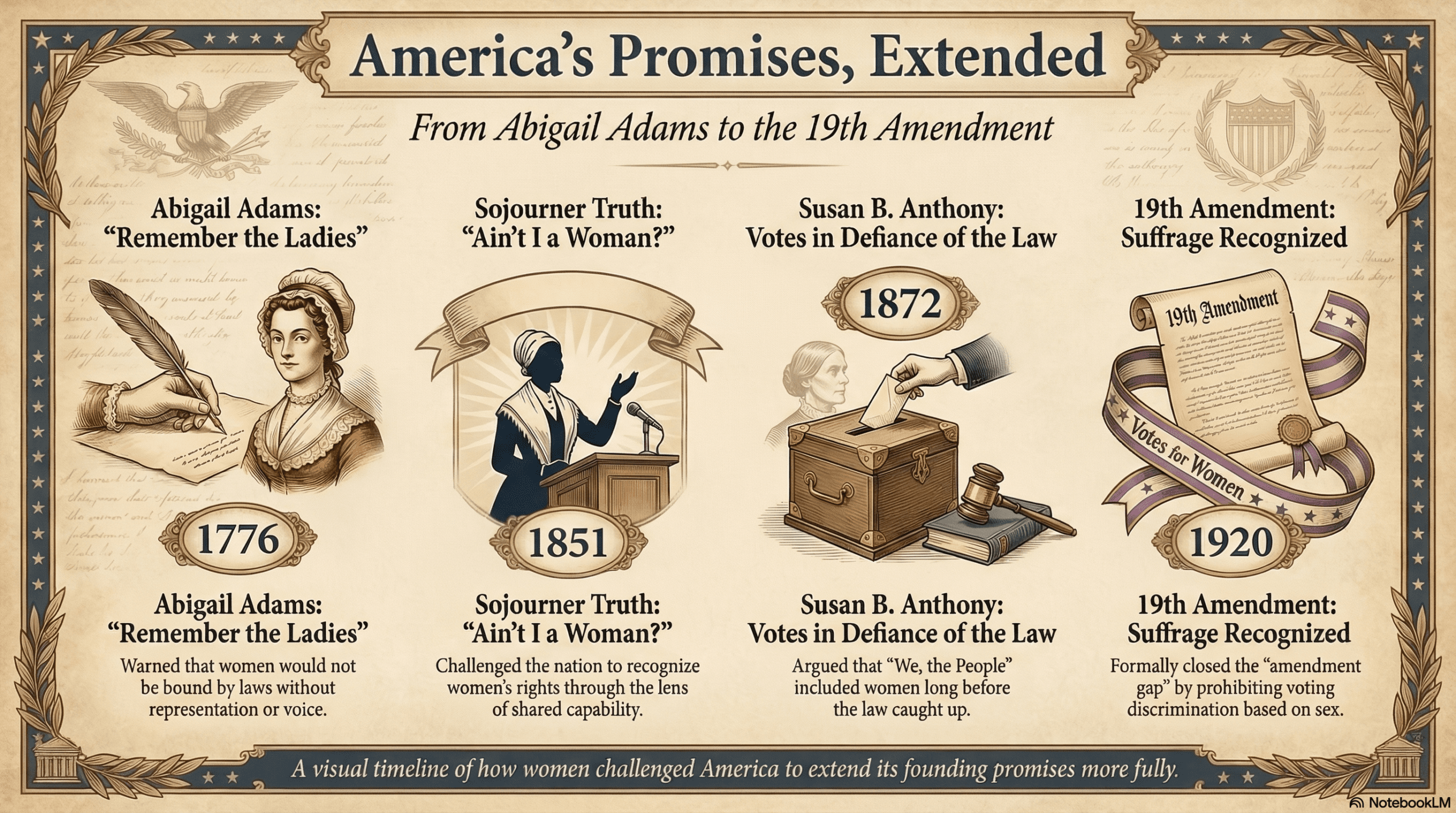
Introduce Adams, Truth, and Anthony. Give students the short excerpts above (or find others—there are plenty). Let them see that women were not separate from this liberty conversation. They were in it, uninvited, demanding a seat.
You can take this in several directions:
Compare the arguments. How does Abigail Adams’s 1776 letter echo the colonists’ complaints against Britain? How does Anthony’s 1873 speech echo Douglass? Students can map the rhetorical strategy across speakers and centuries.
Question the source. The Sojourner Truth comparison is tailor-made for media literacy. Two versions of the same speech, one rewritten by someone else. Which do we trust? Why? (This connects beautifully to SITC.org’s emphasis on critical thinking and checking sources.)
Notice who’s missing. Have students look at any curated collection—a textbook chapter, a list of “greatest speeches,” a museum exhibit—and ask who isn’t there. That’s not about blame or pointing fingers. It’s about developing the habit of asking: what’s the full story?
Discussion Questions for Your Classroom
- Abigail Adams, Frederick Douglass, and Susan B. Anthony all used the Declaration of Independence to argue for rights it didn’t originally protect. Why is the Declaration such an effective tool for this kind of argument?
- John Adams laughed at his wife’s request to “remember the ladies.” What does his response tell us about the gap between principles and practice in 1776?
- Two versions of Sojourner Truth’s speech exist, and the more famous one was written by someone else. What does this teach us about how history gets recorded—and by whom?
- Susan B. Anthony argued that the Constitution already guaranteed women the right to vote. Was she right? Why did it take an amendment to settle the question?
- If you were adding one woman’s voice to Voices of Liberty, whose would you choose, and why?
Why This Matters at 250
As America approaches its 250th anniversary, we’re asking big questions about who we are and who we want to be. Voices of Liberty gives students the foundational documents and speeches that shaped that conversation.
But the conversation was never limited to the voices that made it into the collection.
Women were there from the beginning—writing letters, giving speeches, getting arrested, and demanding that the nation’s promises apply to all its people. Not someday. Now.
This Women’s History Month, help your students hear those voices. Not as a separate lesson. Not as a sidebar. As the next chapter in a conversation that’s been going on since 1776.
The founding documents belong to everyone.
These women knew that. It’s time our students did, too.
Primary Source Links for Your Classroom
Share these with students or use them to build your own excerpts. All are freely available online.
Abigail Adams to John Adams, March 31, 1776 (“Remember the Ladies”)
https://www.masshist.org/digitaladams/archive/doc?id=L17760331aa
Full letter with original spellings, from the Massachusetts Historical Society’s Digital Adams Archive.
John Adams’s reply to Abigail, April 14, 1776
https://teachingamericanhistory.org/document/remember-the-ladies/
Both letters together with historical context, from Teaching American History.
Sojourner Truth, 1851 speech at the Women’s Rights Convention (Robinson transcription)
https://www.thesojournertruthproject.com/compare-the-speeches
Side-by-side comparison of the 1851 and 1863 versions, with audio in Truth’s likely accent.
Susan B. Anthony, “Is It a Crime for a U.S. Citizen to Vote?” (1873)
https://voicesofdemocracy.umd.edu/anthony-is-it-a-crime-speech-text/
Full annotated text from Voices of Democracy at the University of Maryland.
The 15th and 19th Amendments
https://constitution.congress.gov/browse/
Full text of the U.S. Constitution, via Congress.gov.
 MiniGuide (includes Discussion Questions)
 Teacher’s Guide
 Google Quiz
 Printable Quiz
 Kahoot
 Video Download