
Quick Resources: Our free Voices of Liberty collection gives you primary source excerpts with background, modern translations, and ready-to-use classroom activities. This year’s student contests ask about presidential power—a Constitution Day discussion is the perfect on-ramp. Both are at SITC.org.
Subscribe Now to Stay in the Loop
Stay updated on new videos, fresh resources, and student contest announcements.
September 17 falls on a Thursday this year. If your school receives federal funds, you owe your students something on Constitution Day, and if you’re anything like the teachers I talk to, the plan right now is roughly: read the Preamble, hand out a worksheet, hope it lands.
I understand completely. It’s week three. (For some schools. You calendar may vary! 😉) You’re still learning names.
But there’s a version of this day that takes about the same prep and gives students something they’ll still be chewing on in November. It starts with a better question.
Stop asking what the Constitution says
Students can look up what it says. The phone in their back pocket knows the Bill of Rights better than any of us do.
The interesting question is why it’s built the way it is. And that answer turns out to be a little dark, and far more useful than a list of clauses.
The framers designed a government on the assumption that it would eventually be run by people they would not trust with it.
That’s the whole secret.
A machine built for the wrong people
Ask your students to design something simple—a policy for phones in the building, a way to pick the class trip. Most of them will design it around the best case. A fair person makes the call. Everyone behaves.
Then ask the follow-up question: what happens to your design when the person in charge is someone you can’t stand?
Watch what happens. That question is the entire logic of separated powers, and students get there on their own in about four minutes.
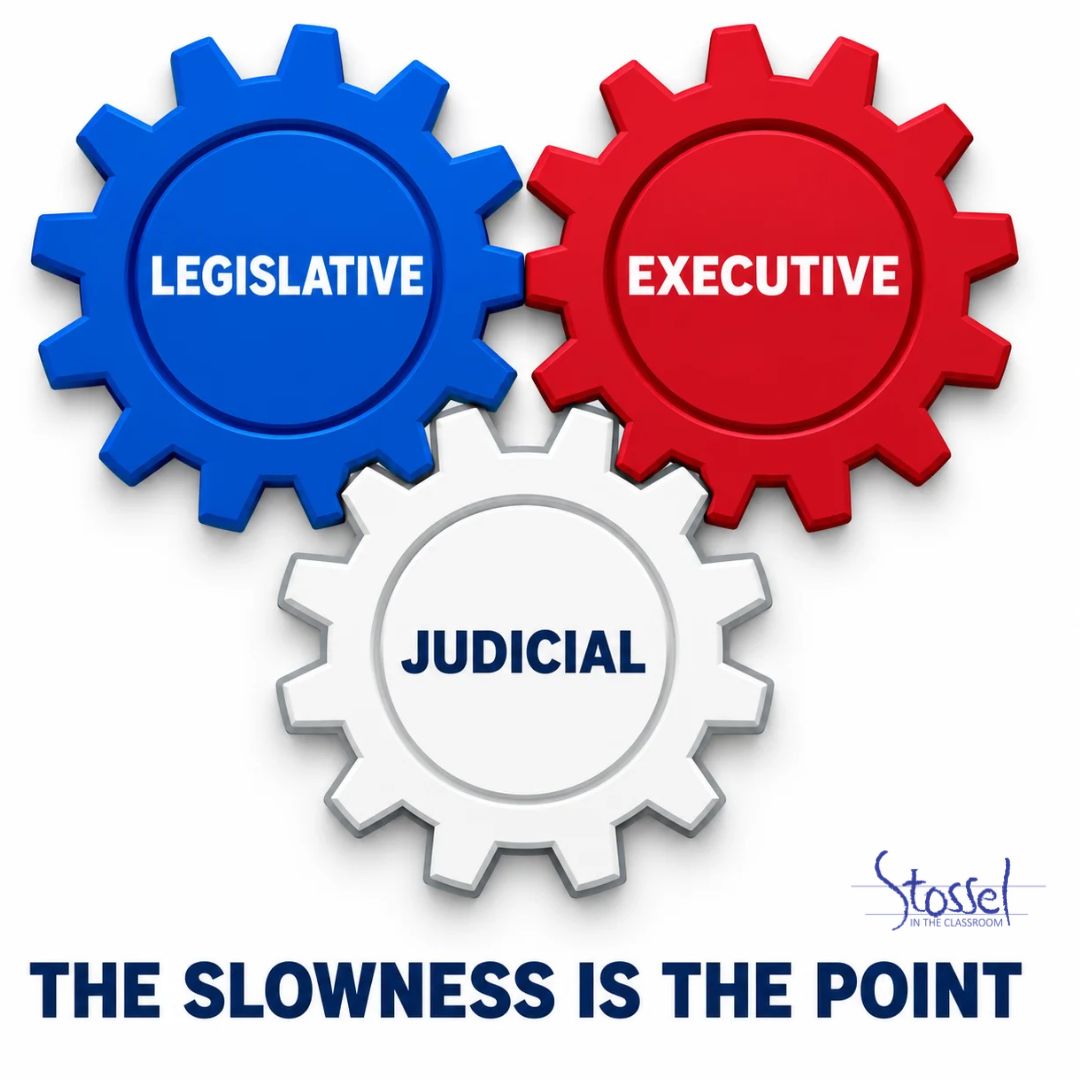
Every awkward, slow, frustrating feature of the U.S. system—two chambers that must agree, a veto, a court that can strike down a popular law, elections on different clocks—exists because someone assumed power would land in the wrong hands and wanted the damage contained. The inefficiency is not a bug that history left behind. It’s the intended product.
This reframes a complaint students hear constantly. When someone says government is too slow to get anything done, that’s not a discovery. It is a design specification, and reasonable people disagree about whether the trade-off is still worth what it costs.
The argument is better than the document
Here is the part that surprises students most: the Constitution was not handed down by a room full of people who agreed. It barely passed. Serious, thoughtful Americans argued that it was a mistake, and they argued in public, at length, in print.
That fight is the best teaching material in American civics, and it is sitting right there in the Federalist and Anti-Federalist papers.
Our Voices of Liberty collection includes excerpts from both sides, with background and modern translations so students are not fighting eighteenth-century sentence structure and the idea at the same time. It also includes the Declaration of Independence, Common Sense, the Preamble, an overview of the Articles, the Bill of Rights and later amendments, Washington’s Farewell Address, Frederick Douglass’s “What to the Slave is the Fourth of July?”, Martin Luther King Jr.’s “I Have a Dream,” and Ronald Reagan’s “A Time for Choosing.”
You can download the entire guide, or expand a single section and take only what you need. For a class period built around one question, that second option is the one you probably want.
We built the collection for America’s 250th, but the documents are older than the occasion and will outlast it. (There will be second edition coming soon as well which will expand on the documents and remove the 250th focus.)
Give the losers their say
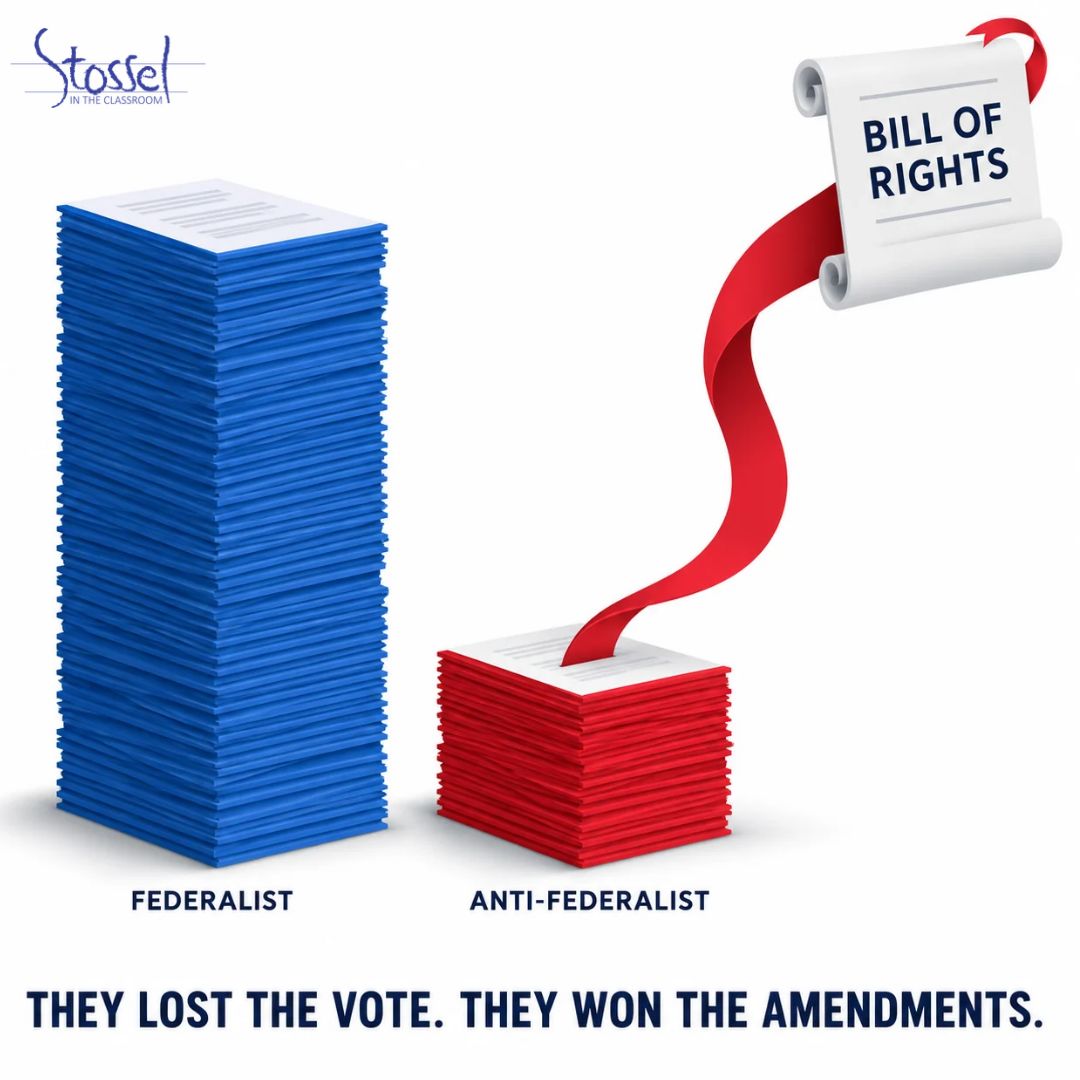
The Anti-Federalists lost. They’re also the reason we have a Bill of Rights.
That’s worth ten minutes on its own. They warned that a distant national government would swallow the states, that the presidency looked a great deal like a king with a shorter contract, and that a constitution without an explicit list of protected rights would leave citizens holding nothing but a promise. They did not win the vote. They won the amendments.
Students who’ve only ever been taught the winners’ side of American history find this genuinely startling. Losing an argument well can still change the outcome. That’s a civics lesson and a life lesson in the same breath.
Try this on September 17
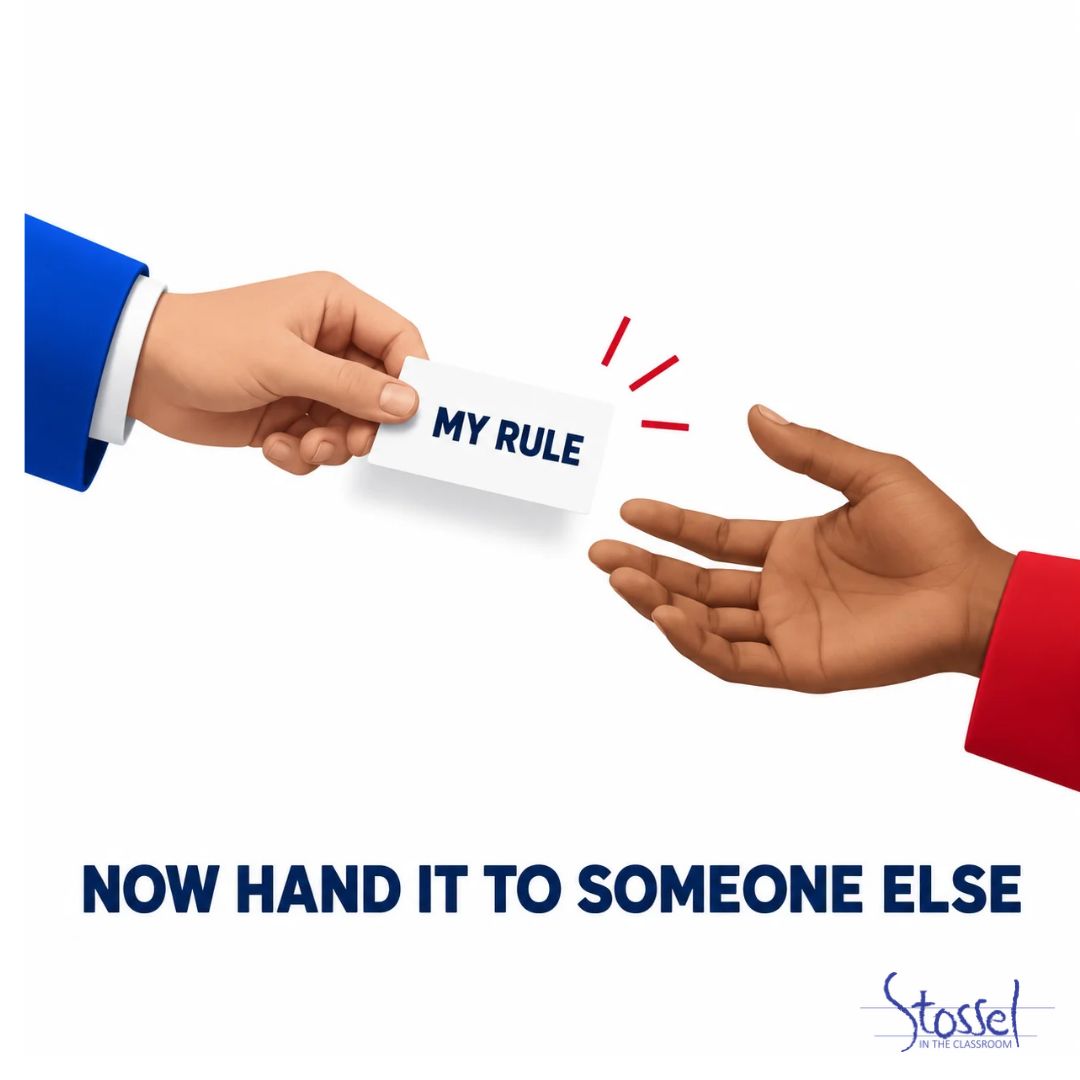
Give each student one rule he or she would like to see enforced everywhere—in school, in the country, anywhere. Real ones. Let them be a little outrageous.
Then hand out the second instruction: the person who will enforce your rule, forever, is the classmate, public figure, or relative who agrees with you least.
Now revise the rule.
What students discover, usually with some visible discomfort, is that a rule they were perfectly happy with suddenly needs limits, appeals, and someone watching the watcher. They’ve just reinvented constitutional design from scratch, and they’ll remember doing it.
Fifteen minutes. No materials beyond paper.
The argument didn’t end in 1788
If that activity gets your students going—and it usually does—there’s somewhere for that energy to land.
This year’s SITC.org student contests ask about presidential power. Specifically: what are executive orders and emergency powers for, what is their constitutional basis, and has their increased use by presidents of both parties amounted to an abuse of executive power?
Students choose one specific case—a particular executive order or emergency declaration—and work through what action the president took, what legal or constitutional authority was claimed to justify it, how the other branches responded, and whether that use crossed a line.
Notice what that requires. A student cannot answer it by deciding which president he or she likes. The prompt names both parties on purpose. To write a good entry, a student has to identify a standard that applies no matter who is sitting in the chair—which is the same test he or she just ran on a classroom rule, scaled up to the presidency.
That prompt runs across the essay and video contests, and it’s also one of this year’s AI Challenge topics—which is a different animal, and worth a look if you teach grades eight through twelve.
In the AI Challenge, students don’t argue the question to a judge. They argue it with a chatbot. The entry is a public link to that conversation, plus a reflection of 500 to 750 words written without AI, covering where the machine helped, where it went vague or one-sided or simply wrong, and how the student’s own thinking shifted along the way. Sources have to be requested and checked. The tagline is “Ask the questions. Challenge the answers.”
For a topic students are going to research with AI anyway, making the interrogation itself the assignment is a useful move.
It also pays. First place is $1,500, second is $1,000, third is $500, and ten finalists take $250 each. There is something in it for you, too—the top submitting teacher receives a $200 gift card, and five more $50 cards are drawn. I’ve never known a class to be unmoved by hearing the first-place number out loud.
One planning note: a student who enters the AI Challenge may also enter the Video Contest, but not the Essay Contest. The deadlines are not the same, either. The AI Challenge closes January 18, 2027, while the essay and video contests run until March 12, 2027—so if the AI Challenge interests you, it needs to be on your calendar before winter break swallows everything. Full rules for all three are posted at SITC.org.
Why this holds up
A rule you only trust in your own hands isn’t a rule. It’s a preference with good lighting.
That test is the reason the Constitution has outlived every faction that has ever held power under it, including the ones certain they would hold it forever. The document isn’t neutral because the framers had no opinions. It’s durable because they built it through compromise, for a future they couldn’t control.
Which is a strange, humble thing to explain to a room of fifteen-year-olds, and also the most hopeful idea in American government. Somebody wrote rules meant to protect people whose names and views they could never know.
That would be us.