
Quick Tip: Uses Voices of Liberty to enhance Black History Month lessons
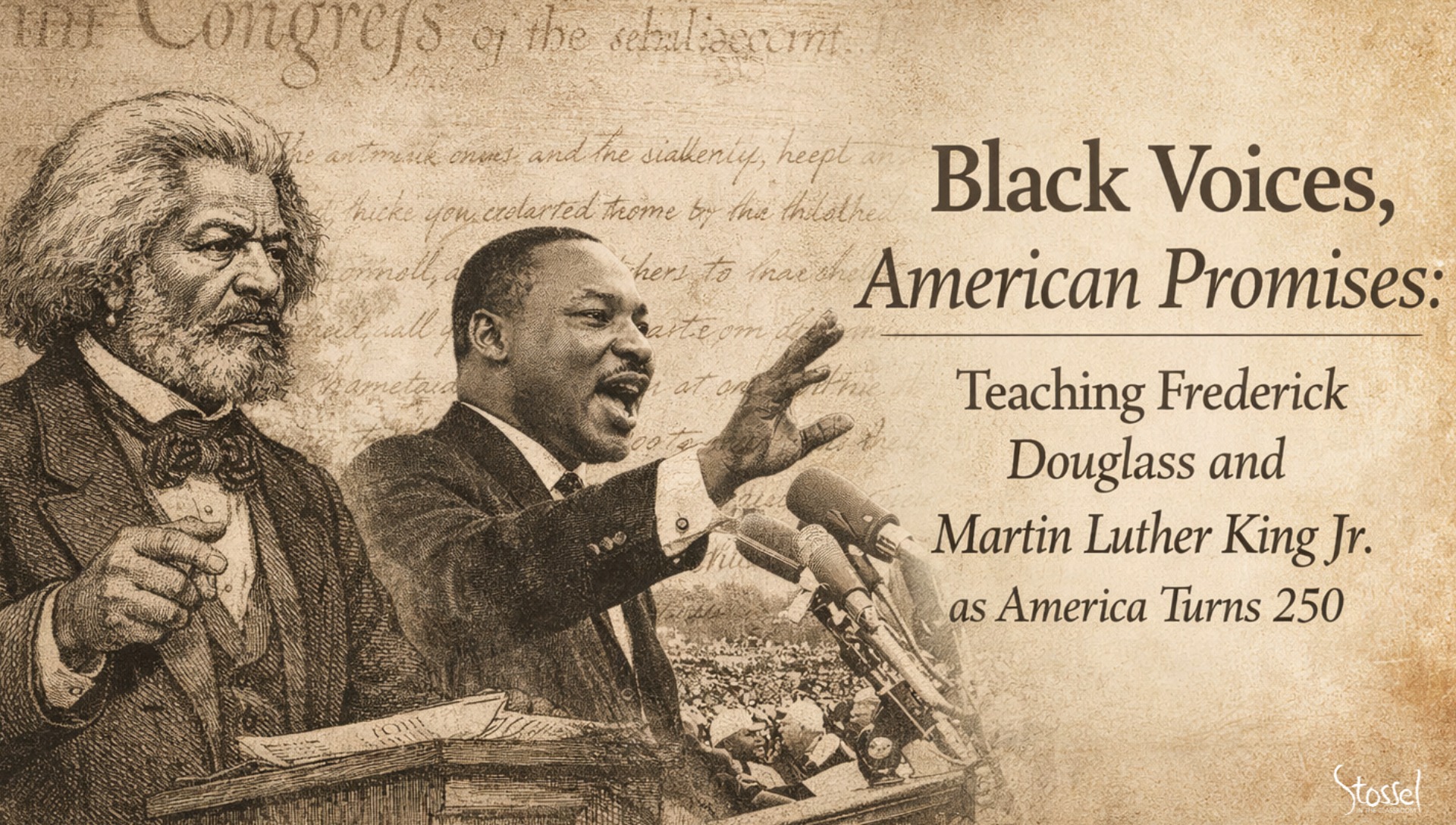
One of the most important—and most misunderstood—ideas in American civics is this:
Critique of government is not unpatriotic.
In fact, it is one of the most American things a citizen can do.
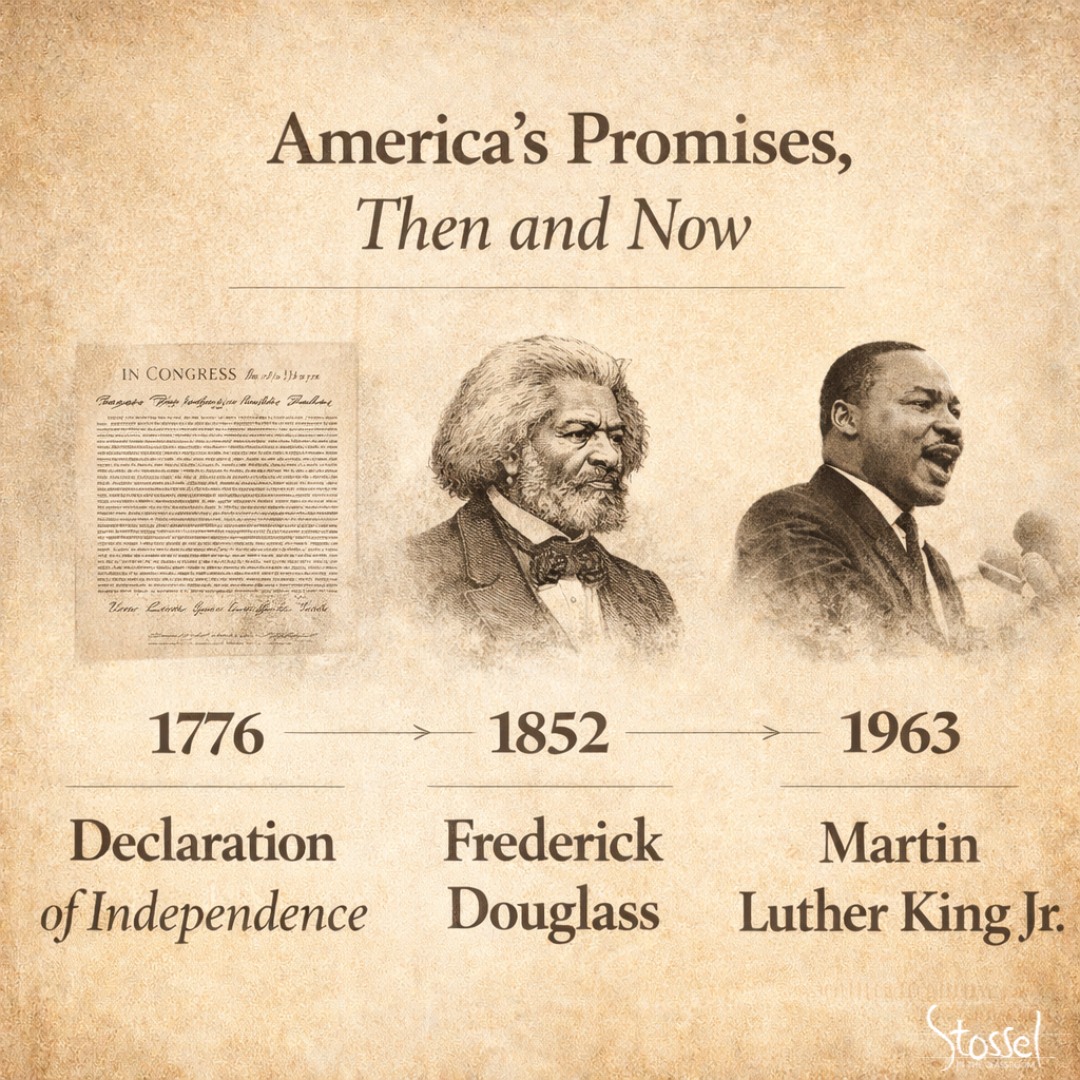
That idea runs straight through the words of Frederick Douglass and Martin Luther King Jr., whose excerpts appear in Voices of Liberty. Both men understood something students often miss: the strongest arguments for justice in America come not from rejecting the nation’s ideals, but from demanding that the nation live up to them.
Subscribe Now to Stay in the Loop
Stay updated on new videos, fresh resources, and student contest announcements.
As we teach Black History Month in the shadow of America’s approaching 250th birthday, their voices help students grapple with a hard but essential truth:
racism in any form violates the principles laid out in the Declaration of Independence—and replacing one form of racial injustice with another does not bring us closer to liberty.
The Declaration as a Moral Standard
The Declaration of Independence does not promise perfection. It does, however, establish a standard:
“All men are created equal, that they are endowed by their Creator with certain unalienable Rights, that among these are Life, Liberty, and the pursuit of Happiness.”
Douglass and King both treat these words not as decorative rhetoric, but as binding moral commitments.
In What to the Slave Is the Fourth of July? (1852), Douglass makes this clear. After condemning slavery in unmistakable terms, he refuses to abandon the Founders’ principles:
“Interpreted as it ought to be interpreted, the Constitution is a glorious liberty document.”
He also said, “I do not despair of this country…the great principles it contains…cheer me with hope.”
Those sentiments matter. Douglass does not argue that America’s ideals are racist. He argues that America’s practices are—and that those practices collapse under the weight of the nation’s own founding promises.
More than a century later, King echoes the same argument in I Have a Dream:
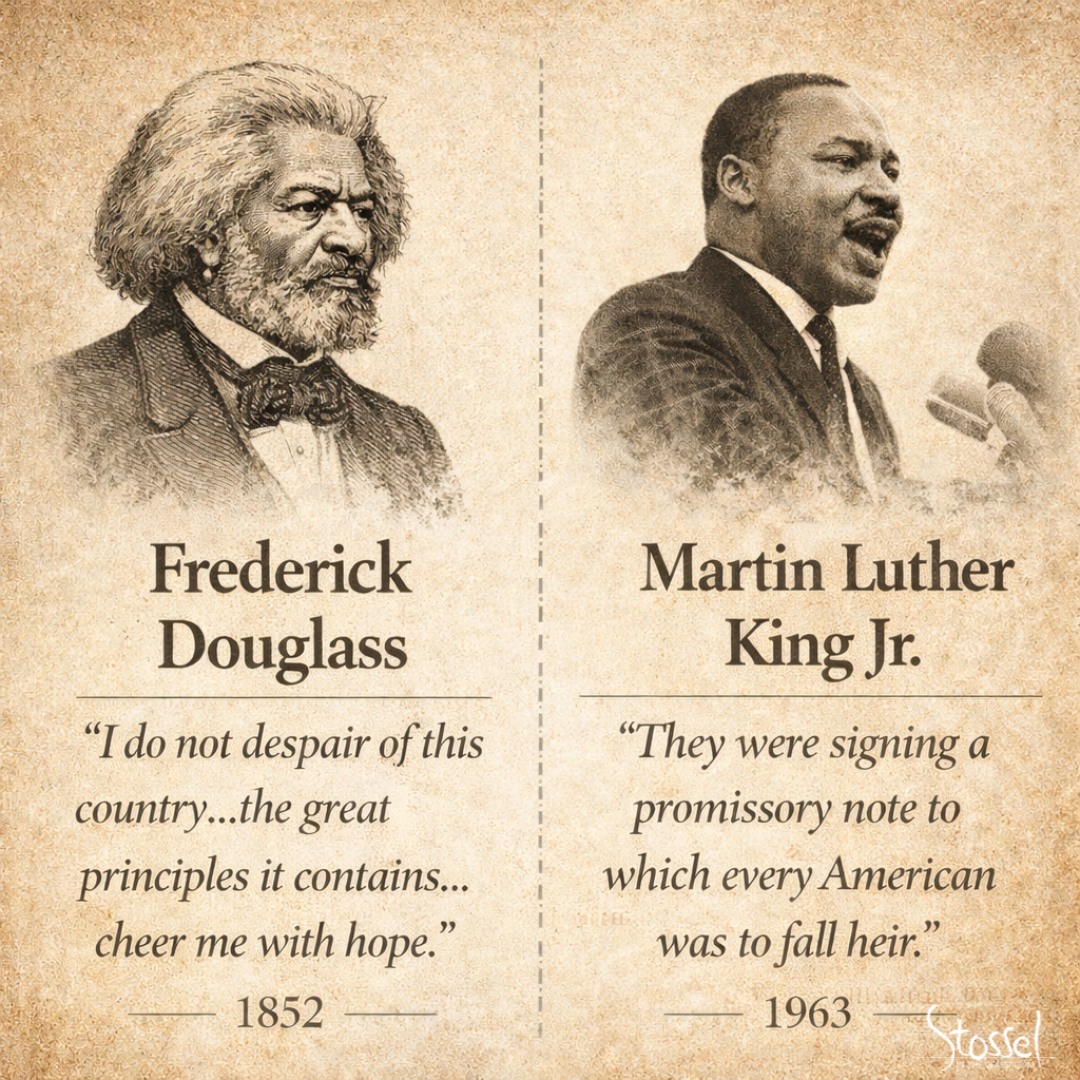
“When the architects of our republic wrote the magnificent words of the Constitution and the Declaration of Independence, they were signing a promissory note to which every American was to fall heir.”
King does not ask the nation to discard the promise. He asks it to honor it.
Racism—Then and Now
This framing is especially important for students today, who are often told—implicitly or explicitly—that injustice can be solved by redistributing blame or power along racial lines.
Douglass and King reject that logic.
Douglass denounces slavery because it denies equal natural rights.
King condemns segregation because it violates equal moral standing.
Neither man argues that injustice is corrected by new forms of racial favoritism, collective guilt, or group-based punishment. Instead, both insist that the answer to racism is fidelity to universal liberty, not its abandonment.
That distinction is critical for students to wrestle with honestly.
Why This Resonates in Today’s Classrooms
Many teachers are telling us the same thing:
students—even AP students—are struggling with reading stamina, motivation, and confidence.
Primary sources can feel intimidating. Voices of Liberty was intentionally designed to lower that barrier without dumbing anything down.
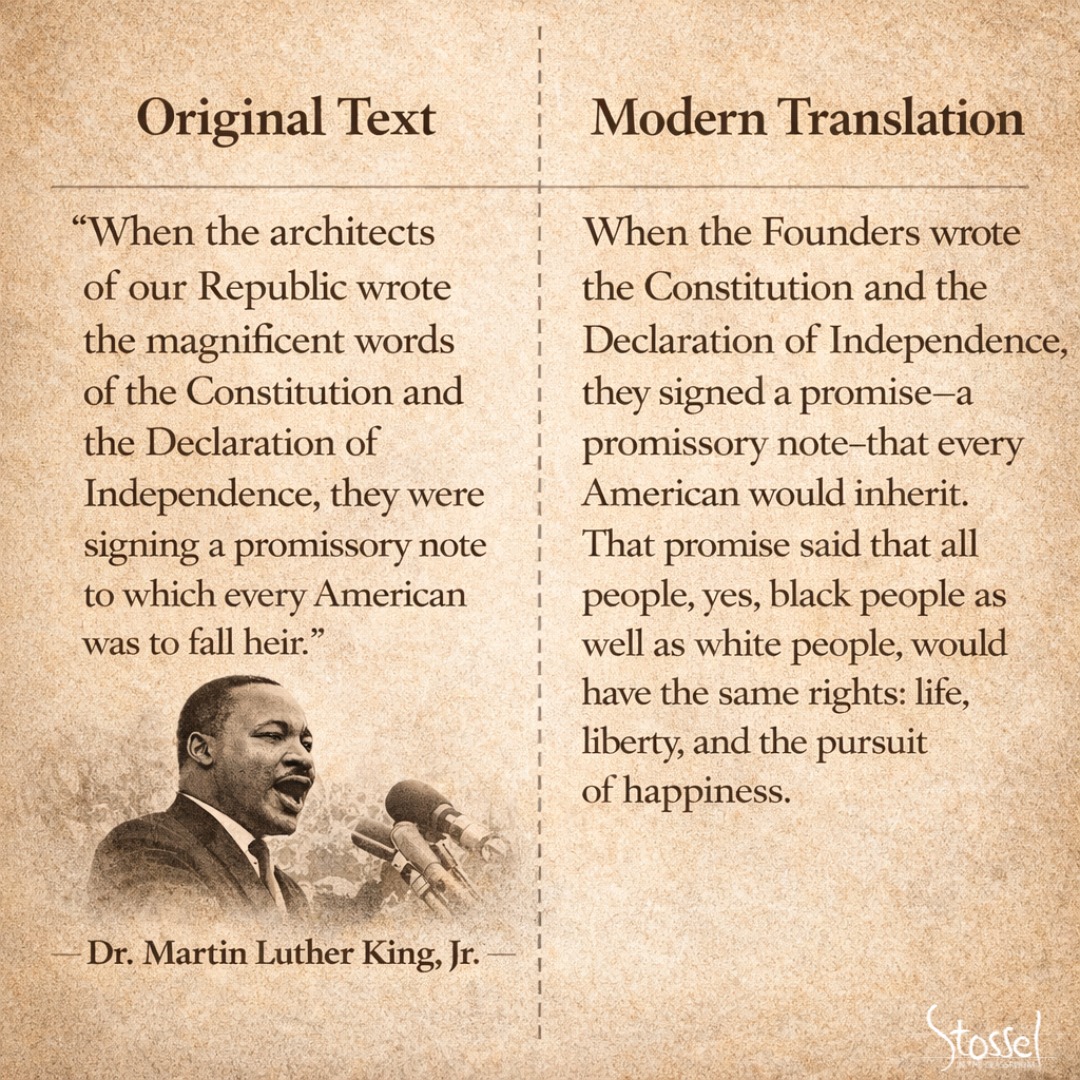
Each Douglass and King excerpt includes:
- Short, carefully selected passages rather than overwhelming full speeches
- Modern-language translations placed alongside the original text
- Guided questions that focus students on meaning, not memorization
This allows students to engage with big ideas even when attention and reading endurance are limited.
Practical Ways to Use These Texts in Class
Here are teacher-tested strategies that align directly with the Douglass and King selections in Voices of Liberty:
- One Paragraph, One Question
Assign just one paragraph from Douglass or King.
Ask a single guiding question, such as:
- What promise is being referenced here?
- Who failed to keep it?
- What would keeping it require?
Short text. Deep thinking.
- Declaration Cross-Check
Have students highlight phrases from the Declaration excerpt:
- “created equal”
- “unalienable Rights”
- “consent of the governed”
Then ask:
Where did Douglass or King argue that America failed this standard?
This makes the critique text-based, not emotional.
- Translation First, Original Second
Start with the modern-language version.
Then return to the original phrasing.
Students gain confidence and are far more willing to attempt the historical text once they understand the meaning.
- Civic Accountability Exit Ticket
End class with:
Is pointing out injustice an act of disloyalty—or an act of citizenship? Defend your answer using one phrase from today’s reading.
This reinforces writing, reading, and civic reasoning all at once.
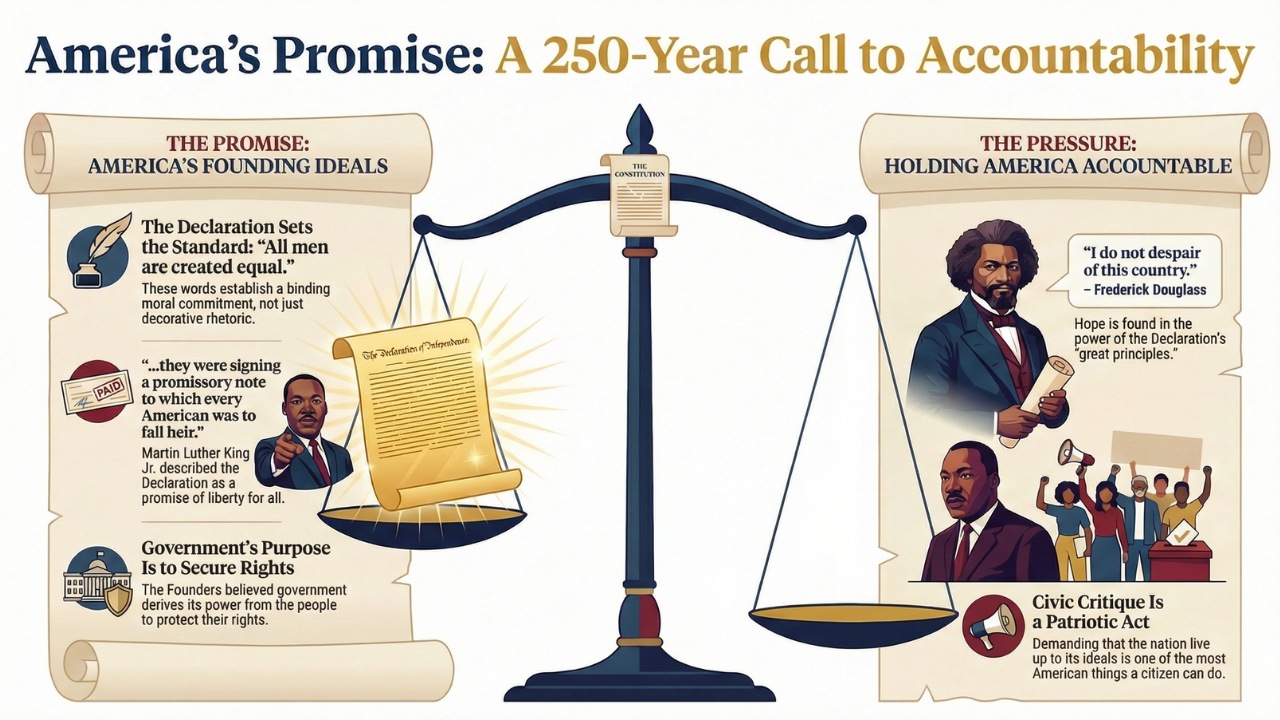
Why This Matters as America Turns 250
Anniversaries invite celebration—but they also demand reflection.
Douglass and King remind us that America’s story is not one of smooth progress, but of persistent moral pressure applied by citizens who refused to be silent.
Their message to students is clear:
- Liberty expands when people speak.
- Rights endure when people insist.
- Ideals matter when people demand consistency.
That lesson is not just appropriate for Black History Month.
It is essential for understanding America itself.
The Takeaway
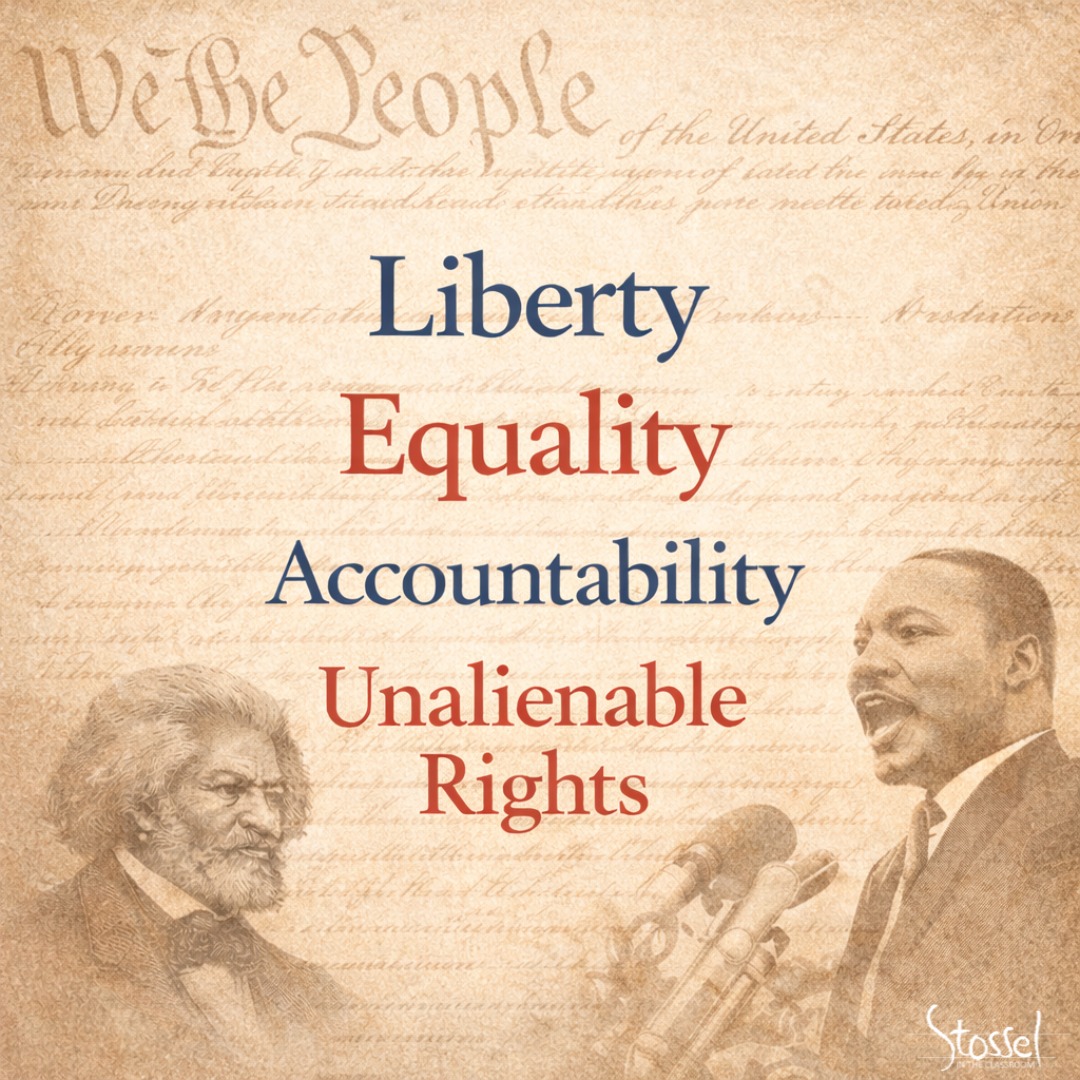
Frederick Douglass and Martin Luther King Jr. teach students that the most powerful form of patriotism is accountability.
By grounding their arguments in the Declaration of Independence, they show that racism—past or present—cannot coexist with America’s founding principles. And they challenge each generation to decide whether those principles are merely words…or obligations.
Voices of Liberty gives teachers the tools to make that challenge accessible, rigorous, and meaningful—especially when students need it most. Download your copy of it for use with your students.
Discussion Questions to Accompany Your Lesson
- What promise do Frederick Douglass and Martin Luther King Jr. argue America made in its founding documents, and what evidence from the texts supports that claim?
- Why do both Douglass and King refer to the Founders and founding documents instead of rejecting them?
- In King’s “promissory note” metaphor, who owes the promise, and who is meant to receive it?
- Is criticizing a nation’s failure to live up to its ideals an act of disloyalty or an act of civic responsibility? Use evidence from the readings.
- How do Douglass and King distinguish between America’s ideals and America’s actions, and why does that distinction matter?
- What personal or social risks did Douglass and King take by publicly criticizing their country, and why might they have believed those risks were necessary?
7, According to the texts, why does racism—regardless of who practices it—conflict with the principles of the Declaration of Independence?
8. Why does King emphasize that the founding promise applies to black people as well as white people, and why was that clarification necessary?
9. Do Douglass and King argue for equal rights or equal outcomes? What language in the texts supports your conclusion?
10. Why do both speakers rely on moral and legal arguments instead of emotional appeals alone?
11. How does King’s use of the “promissory note” metaphor help make his argument clearer, and what might be lost or gained by using a metaphor?
12. Which words or phrases in the original texts are most difficult to understand, and how does the modern translation help clarify their meaning?
13. If America’s founding promises still exist, who is responsible for making sure those promises are kept today?
14. How can a society encourage honest criticism of government without sliding into cynicism or hostility?
15. Based on the ideas in these texts, what promise do you think Frederick Douglass or Martin Luther King Jr. would argue still needs attention today?