 MiniGuide (includes Discussion Questions)

Want More Resources Like This?
Get new videos and resources delivered to your inbox. Always free. Unsubscribe anytime.
Want More Resources Like This?
Get new videos and resources delivered to your inbox. Always free. Unsubscribe anytime.

Quick Resources: Lessons in Lyrics: Don’t Hurt People, Don’t Take Their Stuff, four music videos and a free teacher’s guide, all at SITC.org.
Stay updated on new videos, fresh resources, and student contest announcements.
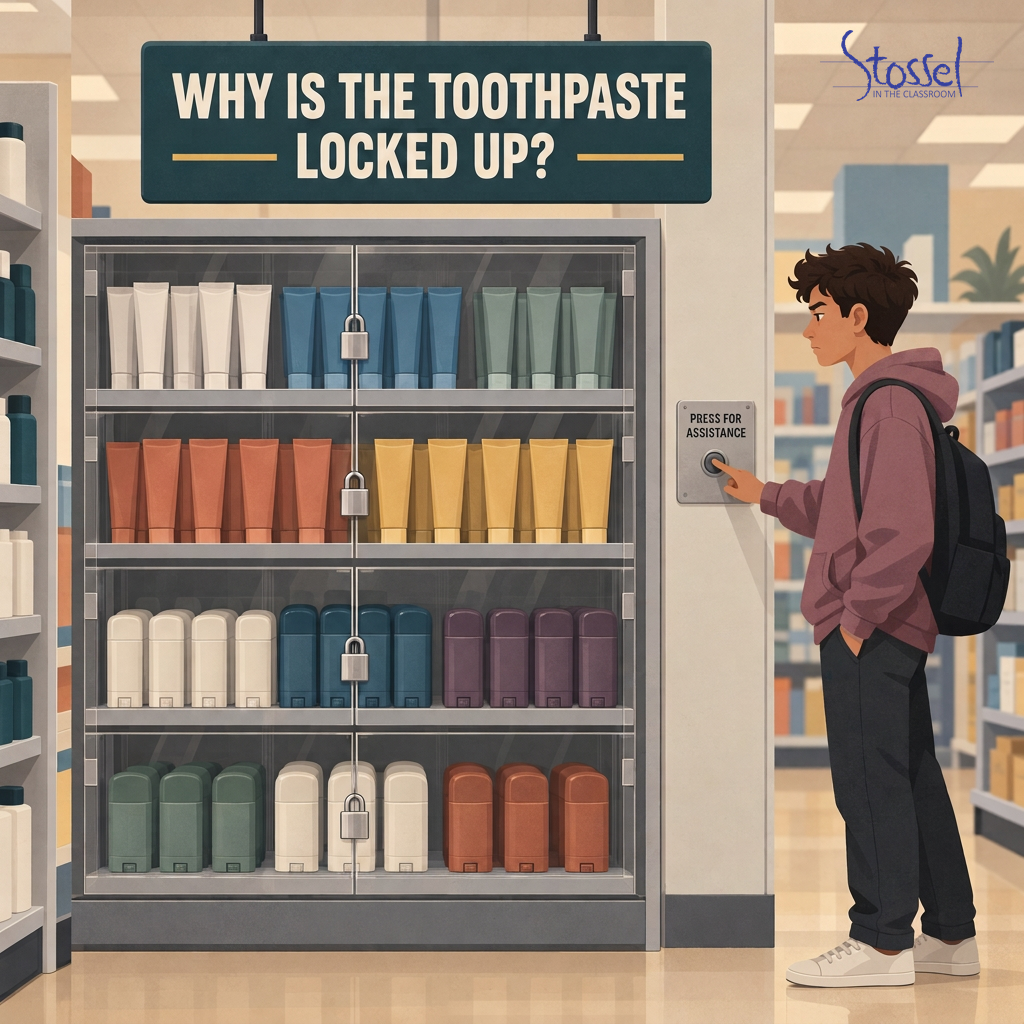
You need toothpaste. That’s it. One tube.
So you walk into the drugstore, find the right aisle, and there it is, behind a sheet of plexiglass. It’s next to the deodorant, also behind plexiglass. There’s a little button that says “Press for Assistance.” You press it. You wait. Somewhere in the back of the store, a chime goes off, and an employee with a ring of keys begins the long walk toward you.
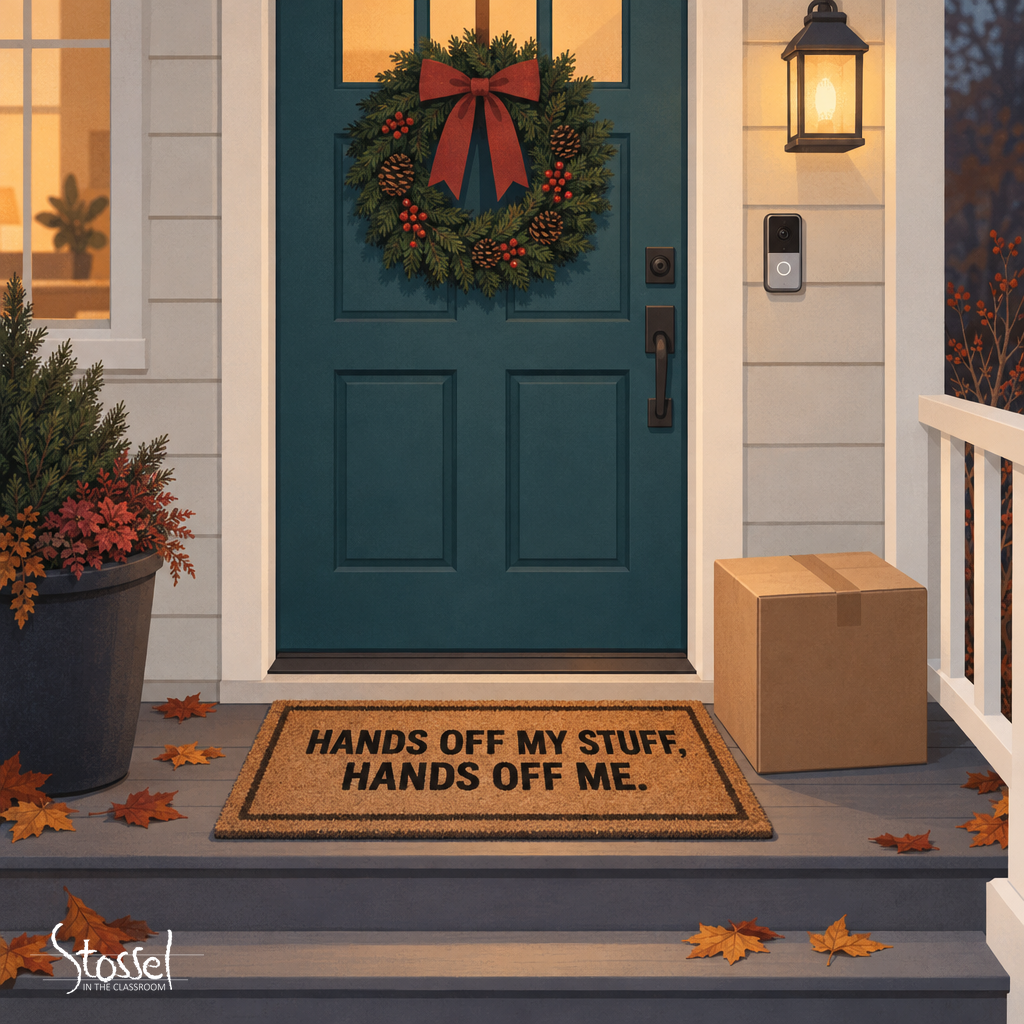
Your students have stood in that aisle, too. They’ve also seen the doorbell videos of someone jogging up a front walk, grabbing a box, and jogging away. And with the holiday shopping season starting this week, there will be a lot more boxes on a lot more porches.
Here’s the thing. Every kid in your room learned (or should have learned) the two simple rules that would have prevented all of it before he or she learned to tie a shoe:
Don’t hurt people. Don’t take their stuff.
It’s the first rule of the playground and the dinner table. It asks only two things of anyone: respect other people’s bodies, and respect what belongs to them. It’s the Golden Rule with its sleeves rolled up.
And it turns out the whole idea of a free society rests on it. Thomas Jefferson put it this way in an 1819 letter:
“…rightful liberty is unobstructed action according to our will, within the limits drawn around us by the equal rights of others.”
In other words, you’re free to do almost anything you want, right up to the point where you start doing it to someone else.
What students rarely see is how far the damage travels when someone ignores that line. A shoplifter may figure the store is a big company that won’t miss one stick of deodorant. But a store that loses merchandise doesn’t just shrug. It raises prices, hires security, locks up its shelves, or, eventually, closes. The person who took the deodorant is gone. Everyone else is standing in the aisle, pressing the button.
That locked case is a lesson in economics, civics, and character all at once. And it’s sitting right there in the personal care aisle.
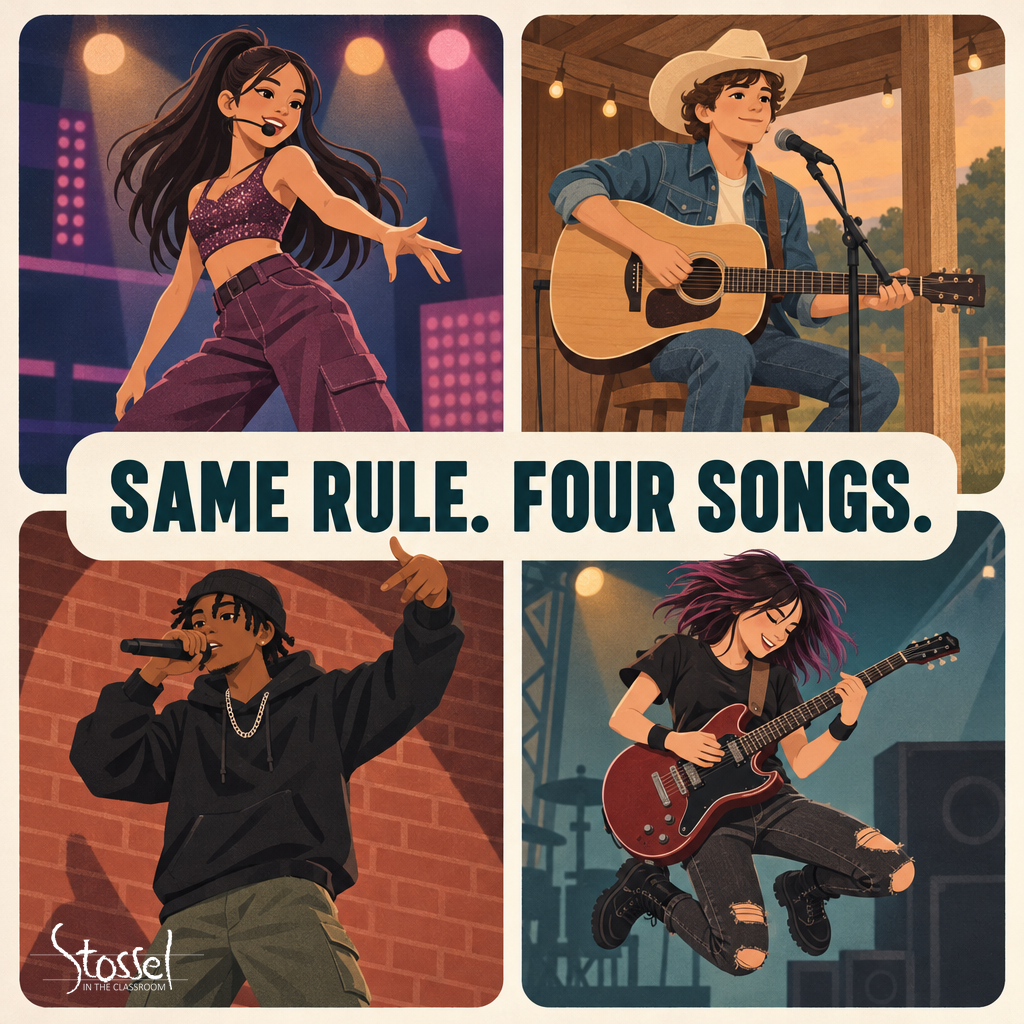
SITC.org’s newest Lessons in Lyrics concept, Don’t Hurt People, Don’t Take Their Stuff, teaches this idea the way the series generally does: with four original music videos, one each in pop, country, rap, and rock. (Fair warning: your students will have strong opinions about which genre is best. That’s half the fun and why we provide options.)
Each one drills the same hook until it’s stuck in everyone’s head, including yours: “Hands off my stuff, hands off me.”
The teacher’s guide gives you vocabulary (voluntary exchange, consent, trust, and, yes, porch pirate), twenty-one discussion questions, many tied to specific lyrics, and seven activities. Two of my favorites follow.
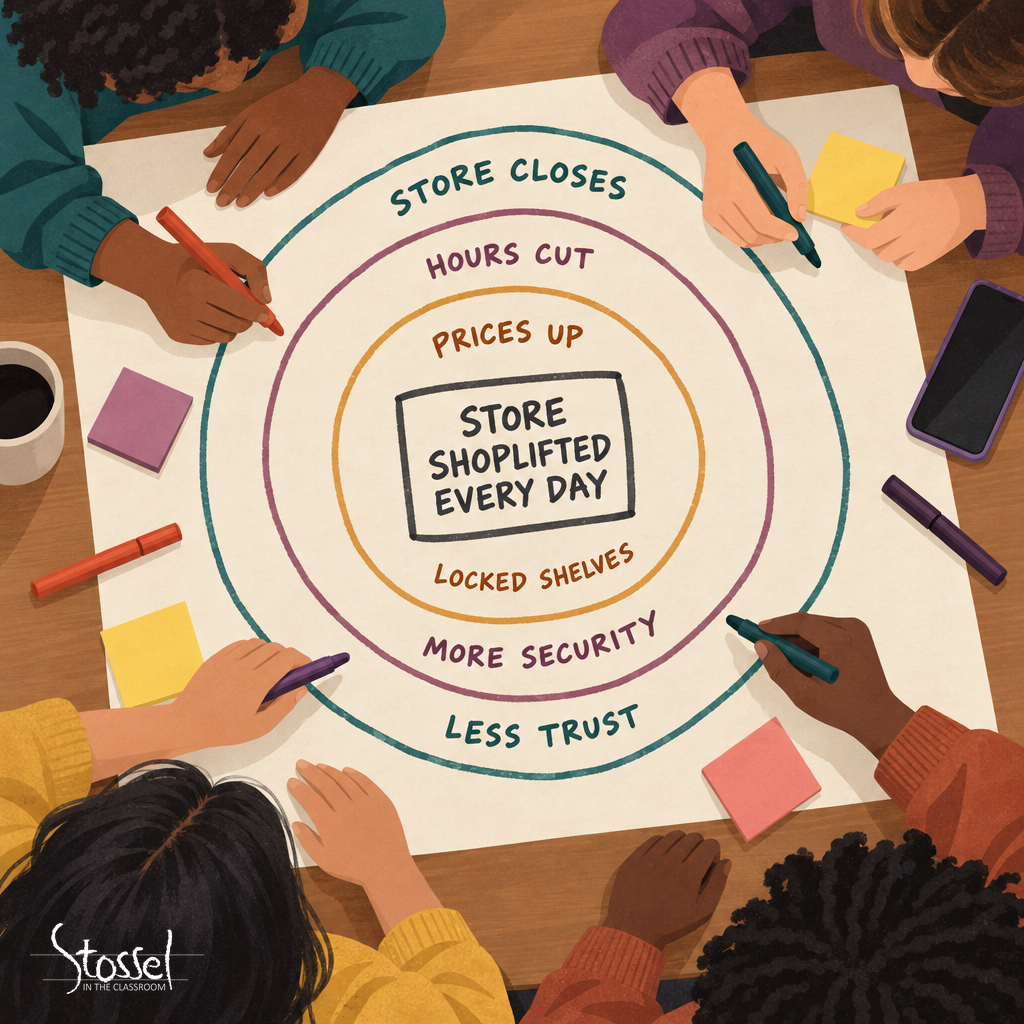
This takes about twenty minutes, and it works best in small groups.
Students are usually surprised by who ends up paying. The third ring tends to fill up with people who never touched the merchandise: the cashier whose hours got cut, the neighbor who now drives twenty minutes to buy groceries, the grandmother standing at the plexiglass.
Want to push older students further? The guide’s extension asks them to find a news story about a store that blamed theft for closing or changing how it operates, then evaluate the claim. What evidence does the story offer? Do other sources describe the cause differently? What else might have played a role? Some of those claims hold up well. Some don’t. Learning to tell the difference is a critical skill.
This one is quick, and it starts arguments in the best way.
Students sort a list of everyday situations into three piles: voluntary, not voluntary, and gray area. Some are easy. Trading your sandwich for a friend’s chips is voluntary. Taking a package from a neighbor’s porch is not.
Then come the ones that get the room talking:
Expect strong opinions, especially about the Wi-Fi. The debrief question that ties it all together is a simple one: What makes an exchange voluntary? Once students see that consent is the line between a trade and a theft, they start noticing it everywhere.
There’s a line that shows up in more than one of the songs, and it’s the one I hope your students carry out the door: doing what’s right matters even when no one’s watching.
That’s really what the plexiglass is about. A locked case is what a store builds when it can’t count on that anymore. An unlocked shelf is trust you can see.
Next week in the U.S., we give thanks, and most of us will list the big things: family, health, a table full of food. It’s worth adding a small one. Neighbors who leave your packages alone. A store that trusts you with the toothpaste.
Hands off my stuff. Hands off me.
It’s one of the oldest rules there is.
It still works and is a necessary foundation for a civil society.
 Teacher’s Guide
 Google Quiz
 Printable Quiz
 Kahoot
 Video Download