Subscribe Now to Stay in the Loop

Stay updated on new videos, fresh resources, and student contest announcements.


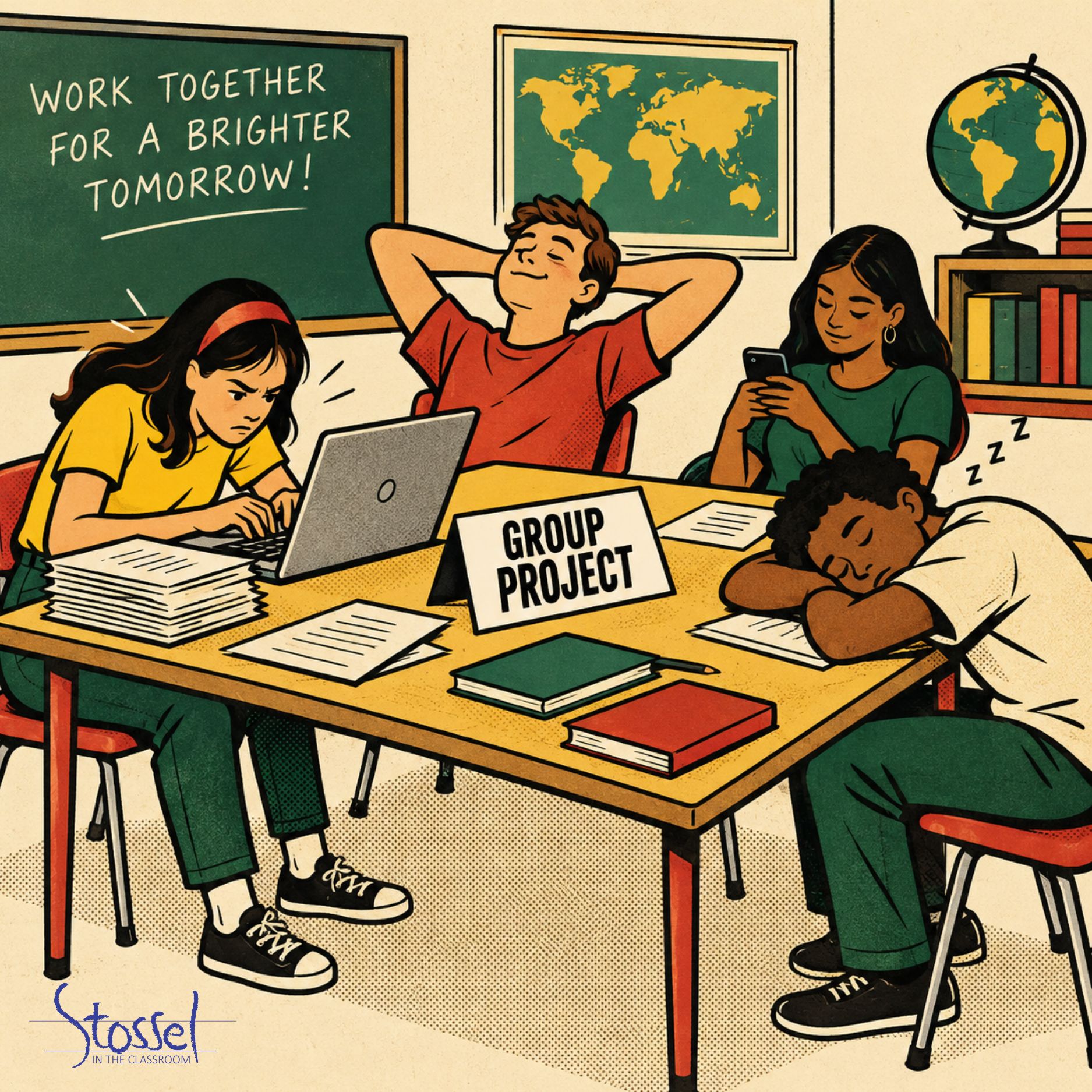
You’ve assigned a group project. You already know how it ends.

One student builds the entire slideshow at 11 p.m. Two others contribute a font choice and a strong opinion about the font. The fourth student’s name appears on the title slide and nowhere else.

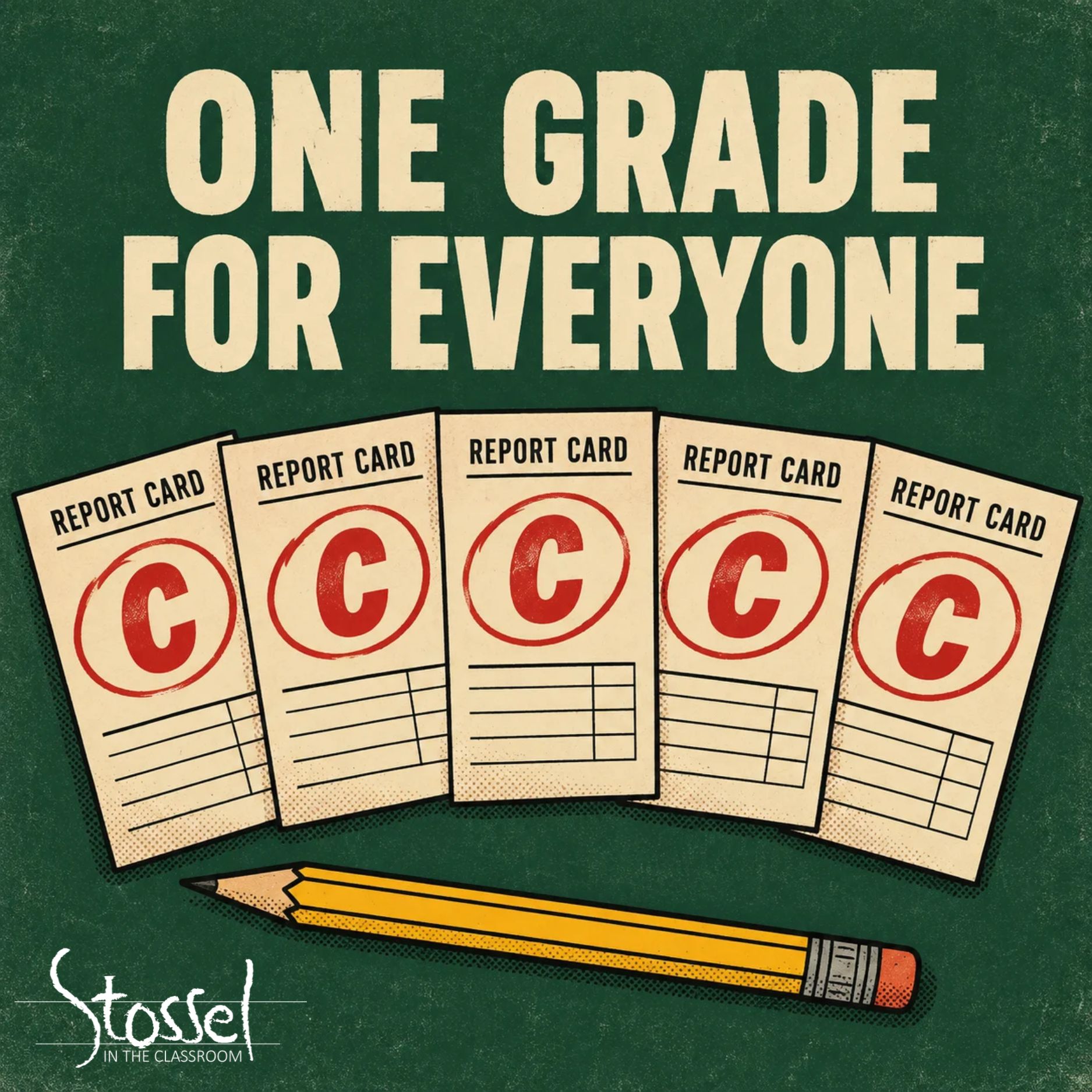
And all four get the same grade.

You didn’t need an economics degree to see that coming. You’ve watched it happen every year since your first classroom. (And it’s always the same student who asks if the next project can be solo. You know exactly which one.)

October is Economic Education Month, and here’s the good news: if you’ve ever assigned a group project, you’ve already run an economics experiment. Economists have a name for what happened. It’s called the free rider problem. When the reward gets shared no matter who does the work, some people stop doing the work.

That one idea, incentives matter, explains more about the world than almost anything else your students will learn this year. And you don’t have to teach an economics course to teach it. You just have to point at what’s already happening in your room.

The Story That Won’t Die

There’s a story that has been passed around for decades, usually told about a college professor whose students insisted that equal outcomes would be fairer. So he averaged every grade on the first test. The students who had studied hard got a B and were annoyed. The students who hadn’t studied got a B and were delighted.

On the second test, the hard workers studied less, and the others didn’t study at all. The average dropped. By the third test, everyone was failing, and nobody was speaking to anyone.

No one has ever been able to pin down whether that class actually existed. It doesn’t matter. Students don’t need the story to be true. They need to recognize it, and they do, instantly, because they’ve lived the group project version.

SITC.org’s The Grade Experiment tells that story in two minutes and twenty-four seconds. A teacher announces that everyone will receive the class average. Effort and reward come apart. Motivation drains out of the room, and the average sinks right along with it. The video names the free rider problem, connects it to collectivism, and lands on one line worth writing on your board:

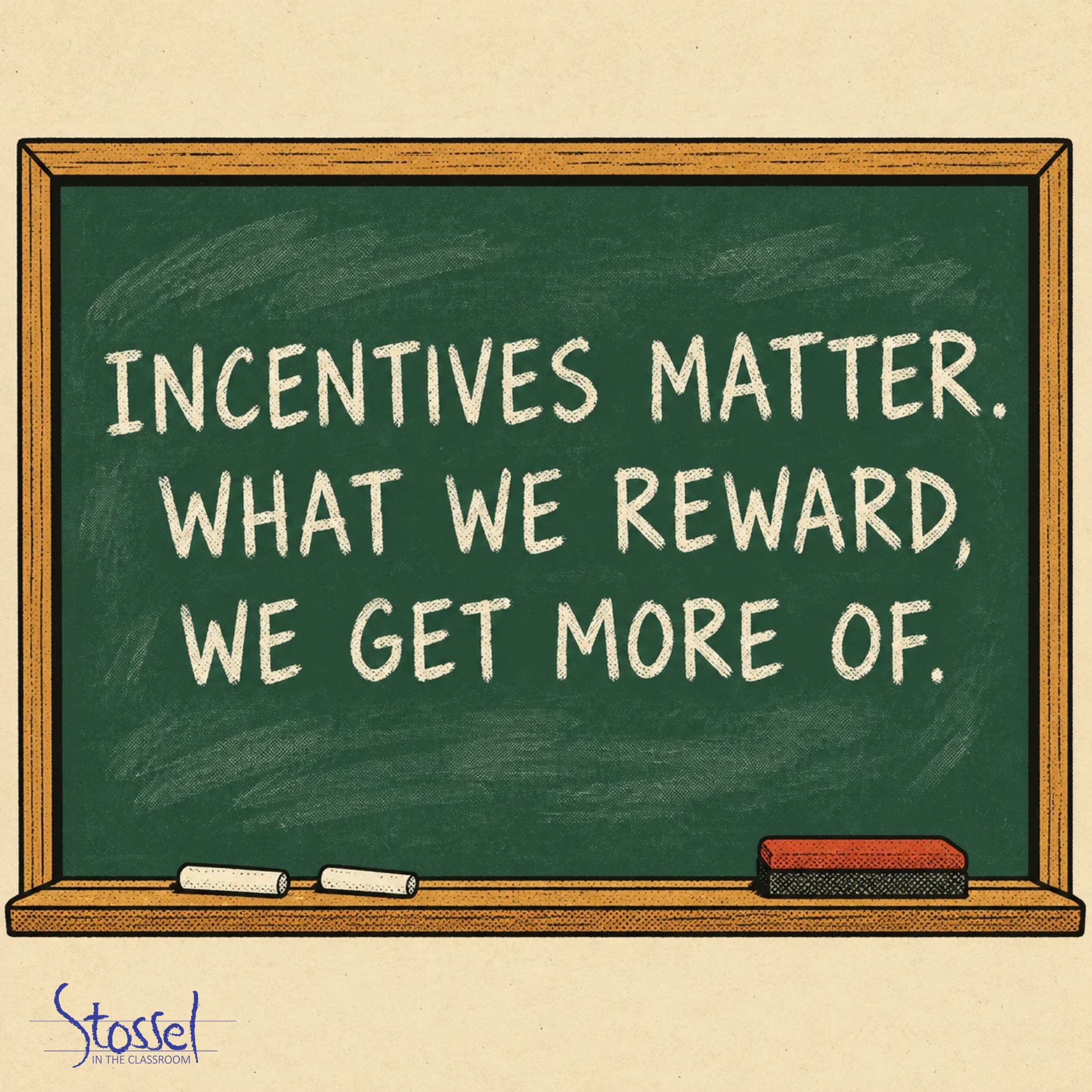
“Incentives matter. What we reward, we get more of.” 

Short enough for a bell ringer. Sharp enough to carry a whole class discussion.

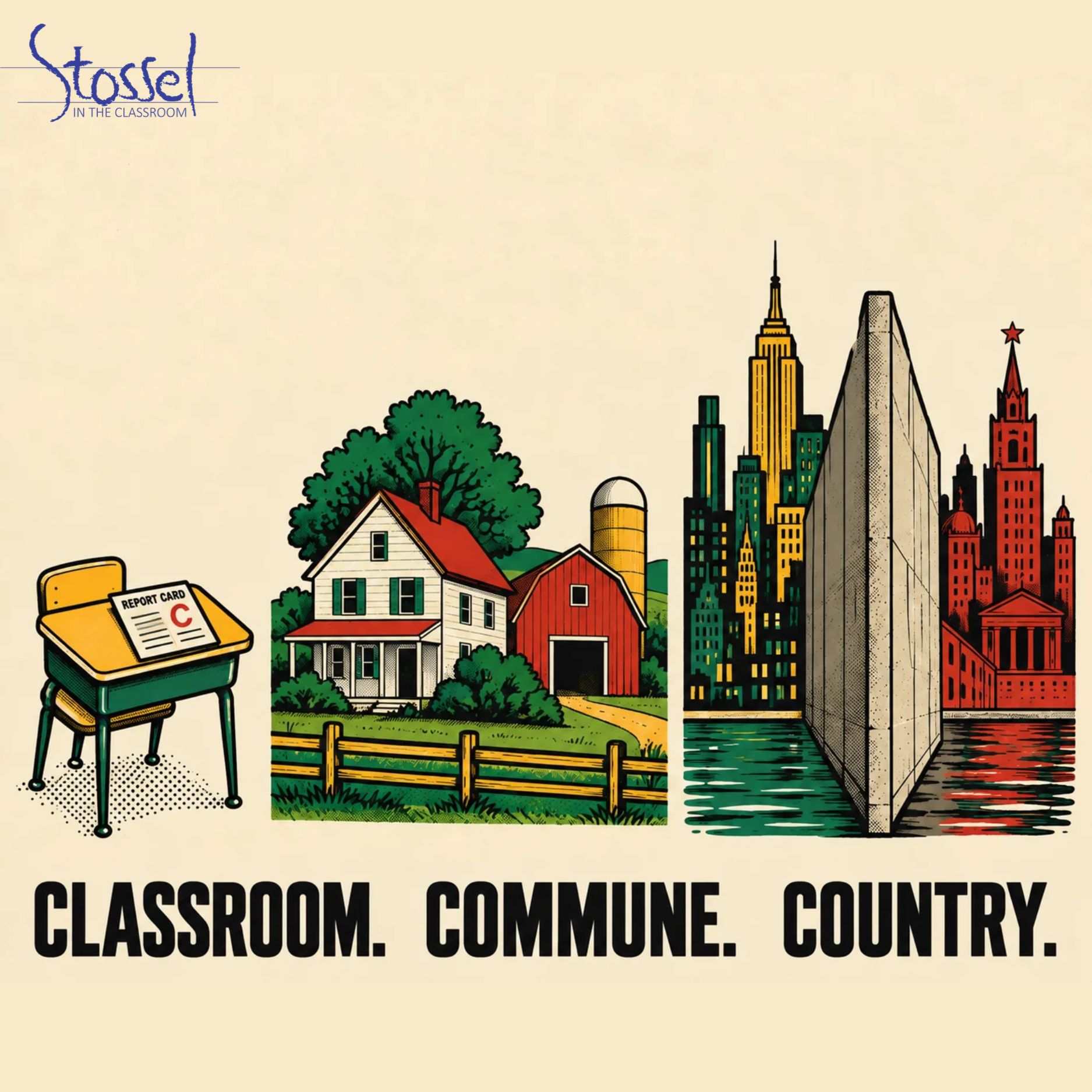
Classroom, Commune, Country

The best part of this lesson is how far it scales.

Once students understand why the hard workers quit studying, they’re ready for a bigger question. What happens when an entire community tries it?

Equal Shares – Why Collectivism Fails answers with history. John Stossel and Yaron Brook visit collectivist experiments in America and Israel, from New Harmony, Indiana, to Israeli kibbutzim and hippie communes such as The Farm. Students start to see a pattern. The communities that lasted did it by giving up collectivism and adopting private property. A few of them grew into brands your students’ grandparents would recognize: Oneida and Maytag.

Then take it one step further, to an entire nation.

Life Behind the Berlin Wall is one of SITC.org’s newest videos, and it’s about as close to a controlled experiment as history ever gets. One country, one people, and one capital city, split down the middle and handed two opposite economic systems. German historians Rainer Zitelmann and Hubertus Knabe, along with people who actually lived in East Germany, describe how central planning shaped everything from the cars people drove to the air they breathed. Meanwhile, on the other side of the Wall, the shops filled up.

Same lesson. Three sizes.

Some of your students will push back, and they should. Families share. Teams share. Plenty of volunteer groups run on nothing but goodwill. So what’s different? That’s where the best discussion lives. When does sharing work, and when does it fall apart? Does the size of the group matter? Does it matter whether everyone can see who’s pulling his or her weight?

Try This: The Candy Experiment

First, a public service announcement. Do not average real grades. Your principal and every parent on your email list will thank you. (You’ll thank yourself, too, and have fewer irate emails in your inbox. 😉)

Use something lower stakes instead. This takes ten to fifteen minutes.

  1. Round one: Give a quick five-question quiz on content you’re already teaching. Each correct answer earns one piece of candy, a sticker, or a ticket toward a class reward. Students keep what they earn. Record the class total.
  2. Round two: Announce a new rule. All rewards go into one pile and get split equally, no matter who answered what. Give a second quiz of the same length and difficulty. Record the total again.
  3. Round three: Ask the class to design a rule that keeps some sharing but brings the effort back. Try it on a third quiz.

(If your school doesn’t allow food, tickets toward five minutes of free time work just as well. Incentives are not picky.)

Fair warning: you may not get a dramatic collapse in ten minutes. Some students will keep working hard out of pride, habit, or pure competitiveness. That’s not a failed experiment. That’s a discussion question. Why did they keep going?

Then debrief:

  • What changed between round one and round two? Who changed the most?
  • Did anyone keep working hard in round two? What kept him or her going?
  • Is it ever fair to split rewards equally? When?
  • What rule did you design in round three, and did it work?
  • Where else have you seen the free rider problem: at home, on a team, or online?

Add a Soundtrack to Economics

If you want the idea to stick, put it to music.

Lessons in Lyrics: “Incentives Matter” teaches the same principle through original songs in pop, country, and rap versions. (Pick the one your students will roll their eyes at least. Or the one they’ll roll their eyes at most. Either approach will work.) The guide includes a story students love about a town that paid a bounty for every rat tail turned in, right up until people started breeding rats to collect the reward.

The guide also includes an activity called “Design a Game, Then Break It,” which pairs perfectly with round three of the candy experiment. Students build a set of rules, then hunt for the loopholes. It’s a crash course in unintended consequences, and it’s a lot of fun.

The Grade Experiment guide suggests this pairing, too. Students watch one of the songs, then compare how incentives work in the song with how they worked in the classroom experiment. If your class wants to keep going after that, SITC.org’s Economic Systems module is a good next stop.

What We Reward

The group project will happen again. Probably next month. One student will build the slideshow at 11 p.m. Others will contribute nothing at all.

But this time, your students will have a name for what’s going on, and they’ll understand why it happens. Not because someone lectured them about economic systems. Because they watched the class average sink and felt it.

What we reward, we get more of. It’s true in a classroom, in a commune, and in a country divided by a wall. That’s a pretty good lesson for Economic Education Month.

It’s an even better one for life.