Grade level and subjects
• Recommended for grades 6-12
• Subjects: Government, Economics, Science / Technology
• Works in Classroom, Hybrid, and Homeschool settings
What students will learn
By the end of this lesson, students will be able to:
• summarize what “net zero” means and why many governments and companies pledged to reach it;
• explain the video’s argument that net-zero policies raised energy prices and weakened power grids in parts of Europe;
• investigate why some public figures and companies changed their climate pledges as demand for electricity grew;
• critique a public warning or claim by testing the evidence behind it and the interests of the person making it; and
• formulate a position on how a country should balance clean energy, reliable power, and affordable prices.
Key concepts and terms covered
Data Center, Electrical Grid, Fossil Fuels, Greenhouse Gases, Incentive, Intermittent Power, Net Zero, Nuclear Energy, Rationing, Renewable Energy, Self-Interest, Trade-off, and Vindicate.
Sample discussion questions
• Why did so many governments and companies pledge to reach net zero by 2050?
• Why does the video say the grid “has to be built around the worst day”?
• According to the video, why did tech companies back away from their climate pledges?
• What trade-offs come with each source of electricity: coal, natural gas, nuclear, wind, and solar?
• What is the strongest argument on the side of the net-zero debate you disagree with?
What’s in the free teacher’s guide
This printable 20-page Teacher’s Guide includes a lesson description, learning objectives, key vocabulary, a fill-in viewing guide with answer key, discussion and analysis questions, classroom activities, and the full video transcript.
Related resources
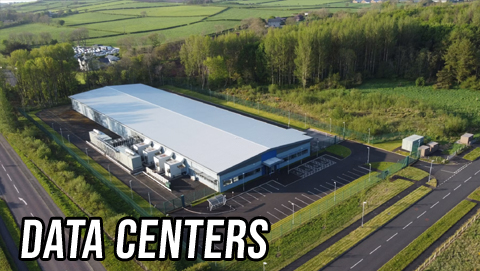
• Both Sides: Data Centers — Are data centers essential to the growth of AI, or do they raise energy costs and burden nearby communities? This pairing presents two perspectives on the power demand the video describes.
• Both Sides: Nuclear Power Revisited — Can nuclear power be a clean, reliable energy source, and are its benefits worth the risks? Two perspectives on the energy source the video says some leaders regret phasing out.
• AI Hysteria: Fact or Fiction? — Are data centers draining America’s water and driving up electric bills, and will AI wipe out jobs? John Stossel and Alex Epstein take on the worries about the technology whose demand for power, this video says, changed so many minds.
• The Nuclear Option — If climate change is an existential threat, why do some of the loudest voices oppose nuclear power? A companion look at testing whether leaders’ actions match their warnings.
• Lessons in Lyrics: Incentives Matter — Why do people do what they do? Change the reward, and you often change the behavior. A useful lens for understanding why leaders and companies shift their positions.
 MiniGuide (includes Discussion Questions)

 Teacher’s Guide
 Google Quiz
 Printable Quiz
 Kahoot
 Video Download