Quick Tip: Use SITC.org’s Voices of Liberty — primary source documents with both original text and modern translations, ready with parts to send home for summer.

Barbara Oakley best-selling author

It’s the last week of school. You’re staring down field day, the locker cleanout, and the assembly that nobody planned but somehow appeared on the schedule. Your students are checked out. You are checked out. The grading is done, mostly. Everyone is ready.

Homeschoolers, you’ve likely finishing up, too.

Now imagine the summer your students are walking into.

Parades. Fireworks. Every retailer in America rolling out red, white, and blue inventory three weeks early. Cable news in patriotic montage mode. Family barbecues with at least one uncle prepared to tell you what the Founders really meant. By the time school starts again in the fall, your students will have absorbed a lot of America.

    Subscribe Now to Stay in the Loop

    Stay updated on new videos, fresh resources, and student contest announcements.


    But absorbing isn’t understanding. They’re going to soak in the vibes of the 250th — and they’re going to do it without ever opening the words those vibes are for.

    That gap is the problem. And it’s also an opportunity. Because you have one or two weeks left, you don’t need a unit, and you don’t need another graded assignment. You need to put the right thing in their hands before they leave.

    Why the Words Matter More This Year

    July 4, 2026 marks 250 years since the Declaration of Independence. That’s not a small calendar hook. That’s a year-long civic moment, and your students are going to be standing in the middle of it whether or not they understand a single line of what’s being celebrated.

    Most of them will know the broad strokes — Jefferson, July 4, “all men are created equal,” tea in a harbor. But knowing about a document and reading it are different things. The Declaration is short. “The Gettysburg Address” is shorter. Frederick Douglass’s “What to the Slave Is the Fourth of July?” is long but unforgettable. None of them are out of reach for a high school student. Many work for middle schoolers too.

    The problem has rarely been the texts themselves. It’s been access. The dense type, the archaic phrasing, the assumption that a fourteen-year-old needs a college professor to translate “endowed by their Creator” before he or she can engage.

        Voices of Liberty Solves That

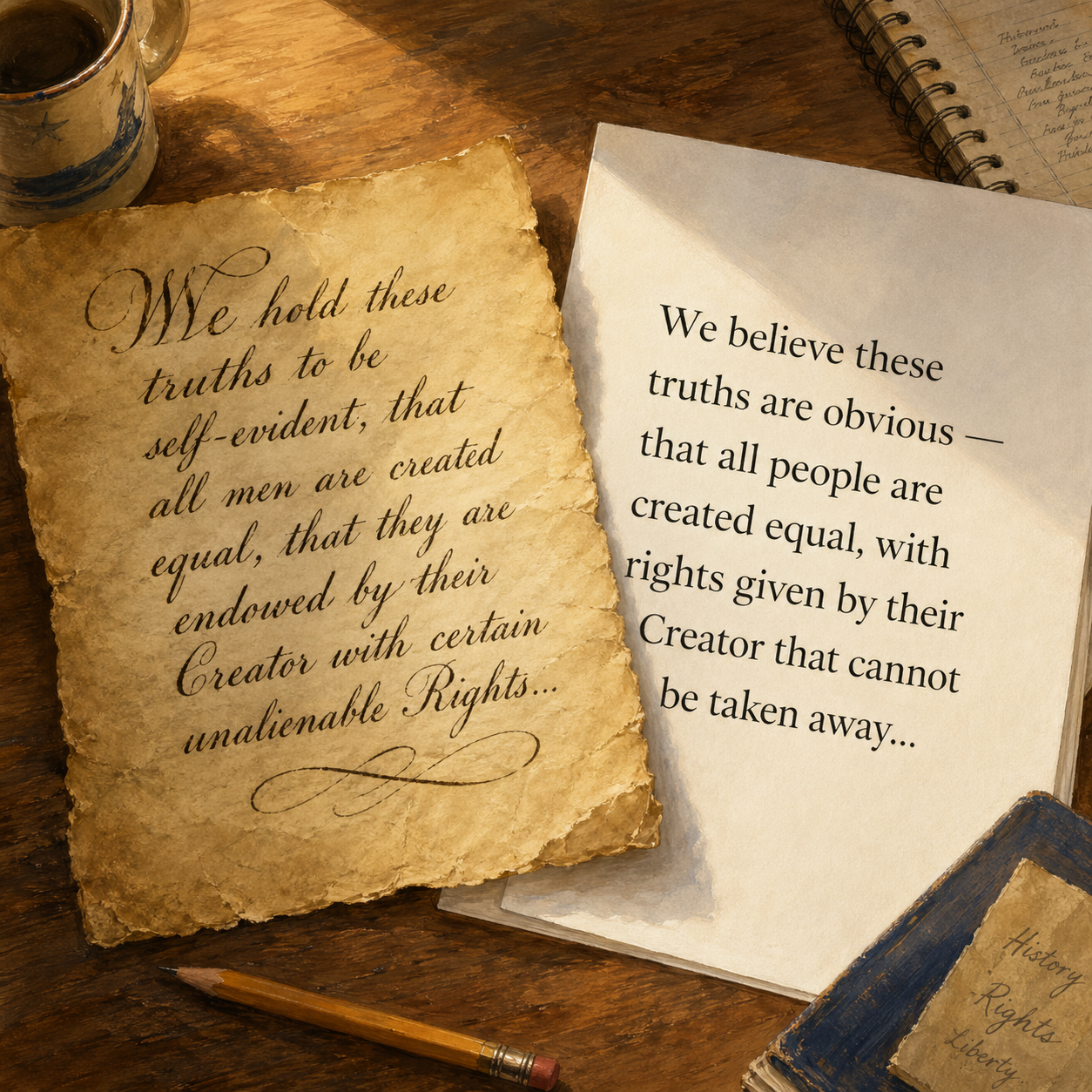
        SITC.org’s Voices of Liberty collection puts primary source documents (often portions of them, not the entire thing) in a format students can actually use. Each document appears with the original text and a modern translation, side by side. The original is preserved — that matters — but the modern version means a student isn’t shut out by eighteenth-century syntax on first read.

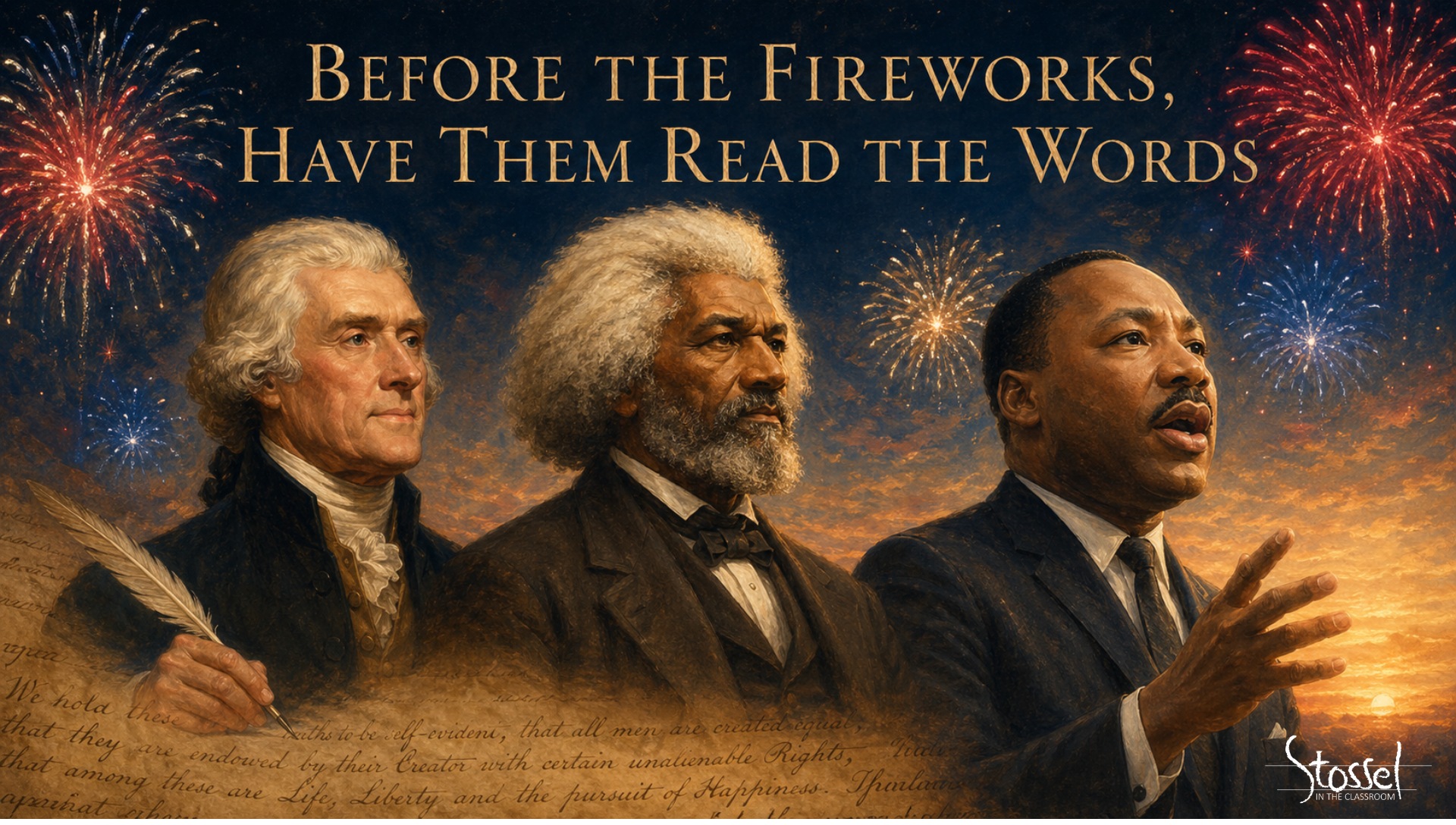
        The collection includes the foundational texts and the texts that talk back to them. Jefferson’s Declaration. Frederick Douglass demanding the country live up to its own words on July 5, 1852. Martin Luther King Jr. doing the same thing again a hundred and eleven years later. These voices belong together, and the collection puts them there.

        For the 250th specifically, SITC.org has built out a Voices of Liberty: 250 Years package — ready to use, no prep on your end, designed for exactly the moment we’re in.

        What to Do With One Week Left

        You don’t need a curriculum overhaul. You need a small, deliberate hand-off. A few options:

        • Pick one document. Send it home. Not as a graded assignment. As a “this is something I want you to have read before the fireworks go off.” Frame it as a gift, not homework. The Declaration itself is the obvious choice and the right one.

        • Pair it with one question. Just one. “Which of these unalienable rights do you think is hardest for a society to actually protect?” Or, “Jefferson wrote ‘all men are created equal’ while owning enslaved people. Frederick Douglass had thoughts about that. What do you think Douglass would say to Jefferson if they sat down today?” One question is enough to keep the document live in their heads all summer.
        • Use Memorial Day as the launch. It lands at the end of May, right when many of you are wrapping up. Memorial Day is about the people who died to make American ideals real. Voices of Liberty is the words those ideals come from. Pair them deliberately. The connection writes itself.
        • Read one paragraph out loud together. That’s it. One paragraph from the Declaration. Or the opening of Douglass’s “What to the Slave Is the Fourth of July?” Read it. Sit with it. Then let them go. You’d be surprised how often that one paragraph is what stays.

        The Honest Truth About Summer Reading

        Some students will read it. Some won’t. That’s how it always goes, and you know it better than I do. But the ones who do — even just a paragraph, even just once, even just because they got curious sitting in the back seat on the way to fireworks — will spend their summer hearing the country talk about itself and have a real reference point for what’s being said.

        That’s worth doing. That’s worth one envelope, one printed page, one sentence in a goodbye email. And it costs you almost nothing in a week when you have almost nothing to give.

        The 250th anniversary is going to happen with or without your students understanding it. The difference between a kid who watches the fireworks and a kid who watches the fireworks knowing what Jefferson actually wrote, what Douglass actually answered, and what King actually echoed — that difference is small in effort and enormous in outcome.

        Hand them the words. Let summer do the rest.