
Quick Resources: Lessons in Lyrics – “No Such Thing as a Free Lunch” and Should the Government Own a Third of America?
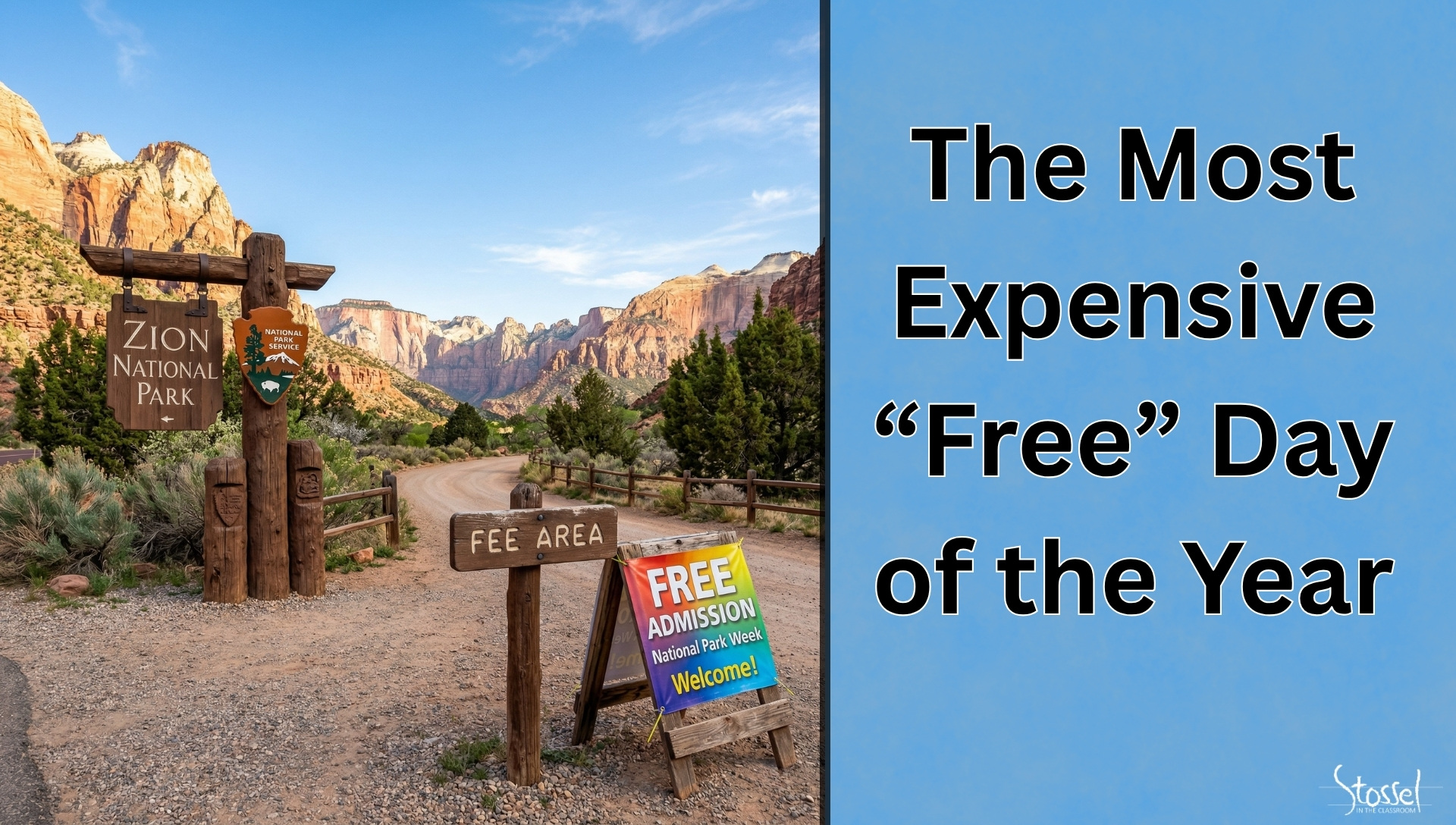
Mark your calendar: April 18 kicks off National Park Week, and entrance fees at every national park in the country are waived. Free admission to Yellowstone. Free admission to the Grand Canyon. Free admission to Acadia, Zion, the Great Smoky Mountains, all of it, no charge.
Your students will love this. Everybody loves free.
Except—and you knew this was coming—nothing is actually free.
That waived entrance fee doesn’t mean the parks cost nothing to operate on April 18. Rangers still show up for work. Trail crews still clear deadfall. Restrooms still need maintenance (and if you’ve ever visited a national park restroom during peak season, you know that’s no small line item). The money to run the National Park Service, roughly $4.5 billion a year, comes from somewhere. It comes from all of us, whether we visit or not.
And that’s a lesson worth more than any entrance fee.
Subscribe Now to Stay in the Loop
Stay updated on new videos, fresh resources, and student contest announcements.
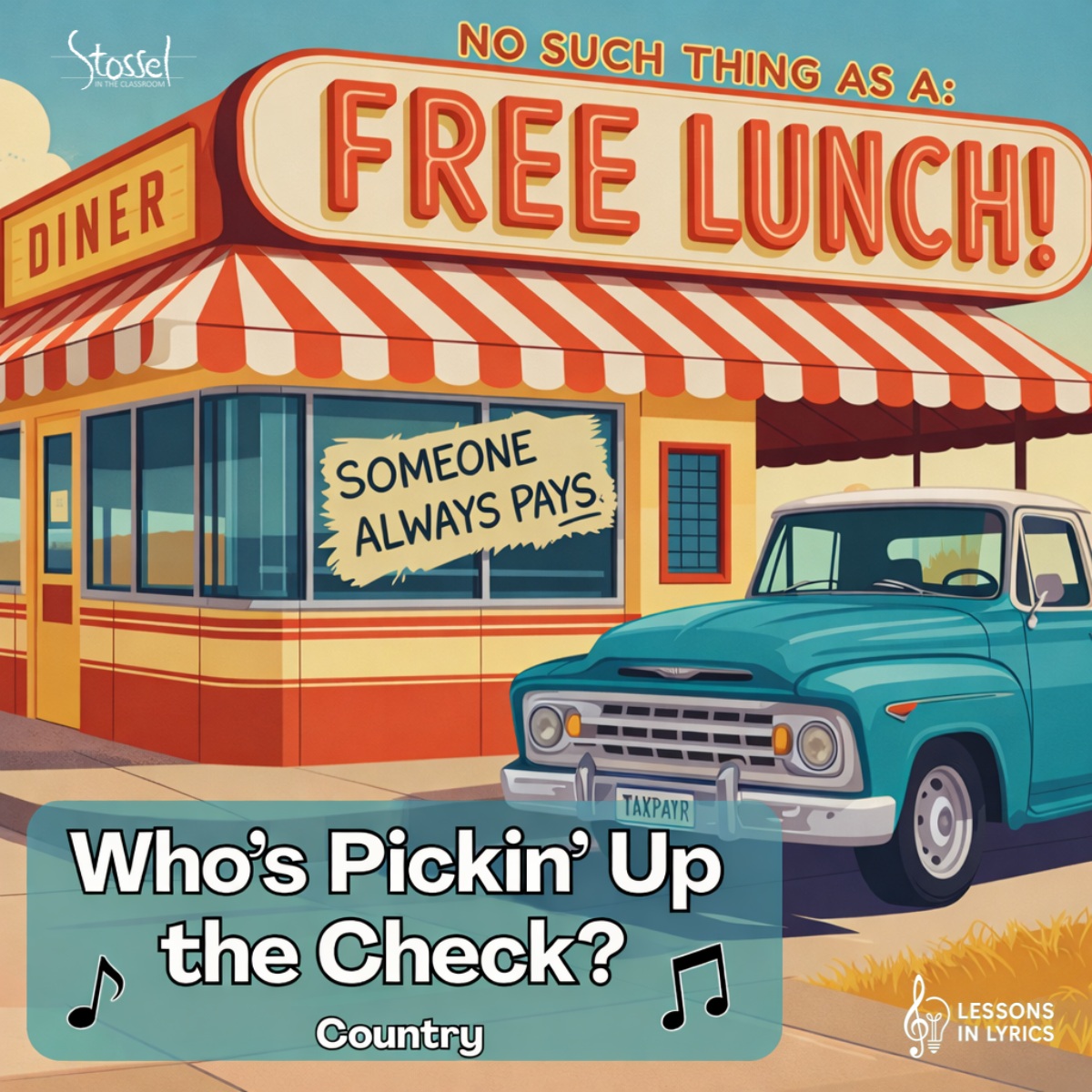
The Lunch That Isn’t Free
Economists have a saying that’s so useful it became a cliché: there’s no such thing as a free lunch. Every benefit has a cost. The question is never whether someone pays, but who pays and whether they had any say in the matter.
SITC.org’s Lessons in Lyrics – “No Such Thing as a Free Lunch” is tailor-made for this conversation. The videos break down the concept in four musical genres (country, pop, rock, and rap) so you can match the style to your students. (The rap version tends to be a crowd favorite. Just saying.) The accompanying teacher’s guide includes discussion questions and activities that make the abstract concrete. Pair it with National Park Week, and suddenly your students aren’t just nodding along to a principle. They’re seeing it in action.
Here’s a quick way to frame it: Ask your students who paid for their “free” park visit. Let them brainstorm. Taxpayers? Which ones: local, state, federal? People who never visit parks at all? What about the concession fees from park vendors, or the revenue from camping permits that other visitors paid full price for the rest of the year? Once students start pulling on that thread, the whole concept of “free” unravels in the best possible way.
The Bigger Question Nobody Asks on Free Admission Day
But here’s where it gets really interesting. Once your students understand that national parks aren’t free, you can push them one step further: Should the federal government own all this land in the first place?
It’s not a trick question. The federal government owns approximately 640 million acres — roughly 28% of all the land in the United States. In western states, that percentage skyrockets. The federal government owns more than 80% of Nevada. More than 60% of Utah and Alaska. If you teach in one of those states, your students live with this reality every day, even if they’ve never thought about it in those terms.
SITC.org’s Should the Government Own a Third of America? digs into this debate from multiple angles. Should that land be preserved exactly as it is? Could states manage it better? What are the opportunity costs of locking up millions of acres, the mining, ranching, housing, and development that can’t happen? And what about the benefits, the conservation, the recreation, the sheer beauty of places that belong to everyone and no one?
This is a genuine policy debate with smart people on both sides, and it’s the kind of question that gets students fired up. Especially when they realize there’s no obviously “right” answer.
Two Resources, One Conversation
The beauty of pairing these two resources is that they build on each other. Start with the Lessons in Lyrics video to establish the principle: every “free” thing has a cost somebody is paying. Then use Should the Government Own a Third of America? to apply that principle to one of the biggest line items in the federal budget — and one of the most contested questions in western politics.
You can do this in a single class period or stretch it across a week. Here are a few ways to use the pairing:
Quick discussion (15 minutes): After watching the Lessons in Lyrics video, ask: “If national parks are free on April 18, who’s paying? Is that fair?” Let the debate run.
Deeper dive (one class period): Watch Should the Government Own a Third of America? and have students map the trade-offs. What do we gain from federal land ownership? What do we give up? Who benefits, and who bears the cost?
Extended project (one week): Assign students a state with high federal land ownership. Have them research what percentage of their assigned state is federally owned, what restrictions apply, and what the economic impact is. Then hold a class debate: should the federal government keep the land, transfer it to the states, or open it to private use?
Discussion Questions: The Cost of “Free” and the Federal Land Debate
Use these after watching the SITC.org resources, or as standalone conversation starters. They work for quick classroom discussions, journal prompts, or Socratic seminars.
1. When the National Park Service waives entrance fees, who pays for the parks that day? Is it fair to ask taxpayers who never visit a national park to help fund them? Why or why not?
- Can you think of other things that are advertised as “free” but actually have hidden costs? Who ends up paying those costs?
- The federal government owns roughly 28% of all land in the United States, but that percentage varies dramatically by state. Why might a rancher in Nevada see federal land ownership differently than a tourist from New York? Are both perspectives valid?
- What are the opportunity costs of keeping millions of acres of land under federal control? What are the opportunity costs of selling or transferring that land to states or private owners?
- Some people argue that national parks should charge higher entrance fees so that the people who use them bear more of the cost. Others argue that higher fees would keep lower-income families out. How would you balance access and funding?
- If your state were suddenly given control of all federal land within its borders, what would change? What decisions would your state government face that the federal government currently handles?
- “No such thing as a free lunch” is one of the most famous principles in economics. Why do you think so many things are still marketed as “free” if everyone knows someone is paying? What does that tell us about incentives?
The Price of “Free”
National Park Week is a wonderful thing. The parks are treasures. Getting more families through those gates — especially families who might not otherwise visit — is a genuinely good idea.
But the best gift you can give your students isn’t a free admission day. It’s the habit of asking: Who’s paying for this? Why? And is there a better way?
Not cynicism. Skepticism. Just critical thinking about how the world actually works.
That’s a lesson that lasts a lot longer than a day at the park.